

orange grass
- noun
- /ˈɔrɪndʒ ɡræs/
- US
- Some gardeners consider orange grass a stubborn weed that invades lawns rapidly.
Examples
-
In the meadow, patches of orange grass grew among taller wildflowers.
-
Botanists are studying orange grass due to its unique adaptation to dry soils.
-
The orange grass grew abundantly in the field.
-
Many gardeners dislike orange grass for its invasive nature.
-
In the sunny meadow, patches of orange grass flourished, attracting curious butterflies.
-
Many farmers are concerned about orange grass taking over their fields during the summer.
-
Some people use orange grass as a natural ground cover in their gardens.
Synonyms
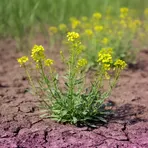
A small yearly weed with thin wiry stems, tiny flat leaves, and small yellow flowers
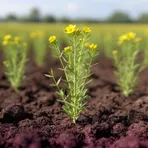
A small plant that lives for one year, with thin stems, tiny flat leaves, and small yellow flowers

A small yearly North American plant with thin stems, tiny flat leaves, and yellow flowers
Surface Forms
Morphology
This phrase is a straightforward color + noun combination: 'orange' (a color) modifying 'grass' (a type of plant), so a B1 learner who knows both words will infer it denotes a kind of grass characterized by an orange hue. Although it names a particular botanical species (so exact botanical features may be unknown), the basic compositional meaning is directly predictable from the constituents.
Etymology
Orange grass likely gets its name from how the plant looks: thin, wiry stems and tiny yellow flowers that give it an orange tint, so people thought of it as a small grass. That's why the name is used for a small, one-year 'weed' with very small leaves and little yellow flowers.

