
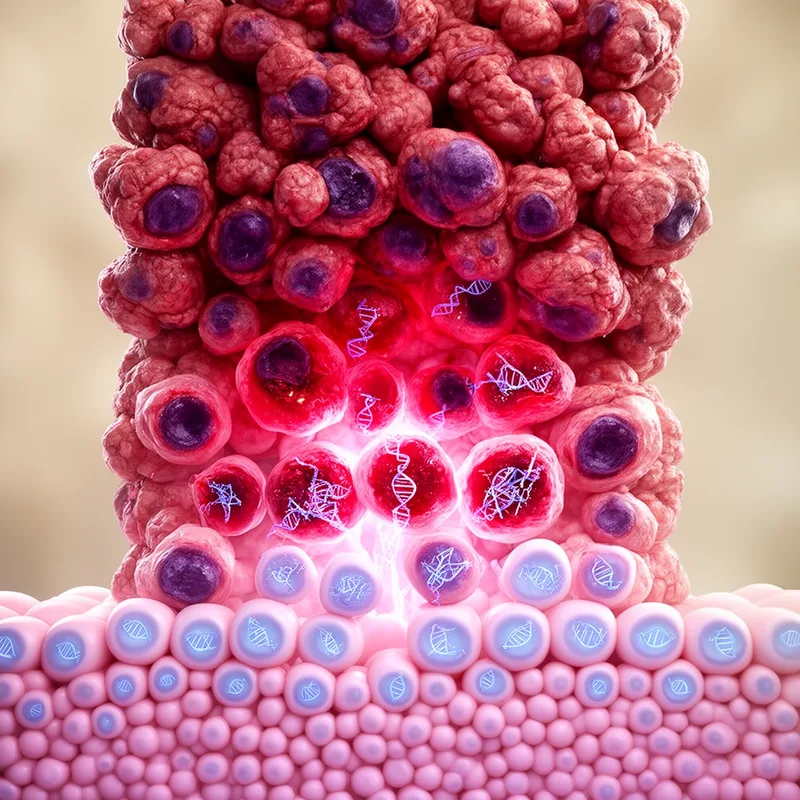
oncogenesis
- noun
- /ˌɑnkoʊˈdʒɛnɪsɪs/
- Specialized
- The bcl-2 protein is a proto-oncogene that promotes oncogenesis by blocking programmed cell death (apoptosis).
Examples
-
Exosomes may also play a role in the activity of p53, the gatekeeper of the genome, by disrupting tumor suppression functions, a fundamental mechanism of oncogenesis.
Academic text (2017) -
This really changes our view of the role of viruses in oncogenesis and it changes it in a quite a fundamental way.
-
Epidemiological studies have established the link between HBV infection and HCC, yet the mechanism of oncogenesis has not been elucidated.
Academic text (1994) -
The bcl-2 protein is a proto-oncogene that promotes oncogenesis by blocking programmed cell death (apoptosis).
Academic text (2008) -
Evidence is accumulating that herpes simplex virus (HSV) infection is implicated in oncogenesis.
Academic text (2006) -
Research has shown that mutations in certain genes can initiate oncogenesis, ultimately leading to the formation of tumors.
-
Understanding the mechanisms of oncogenesis can help scientists develop targeted therapies for various types of cancer.
Synonyms

 1
9.4
1
9.4

Abnormal, uncontrolled cell growth that forms a lump or tumor
 1
7.5
1
7.5
The process by which normal cells change into cancer cells


 1
8.2
1
8.2
Cells grow in an abnormal way and form a lump in the body

Normal tissue changes into cancer cells
How Advanced
- Specialized
4
7.8

- Specialized
25
5.7
62
3.8
- Specialized
15
4.7
Surface Forms
Morphology
Etymology
Oncogenesis comes from Greek parts onco- meaning 'tumor' and -genesis meaning 'origin' or 'creation'. Think of -genesis like the words generate and genetic, which are about 'making', so oncogenesis is the 'making of a tumor' — the process that turns normal cells into cancer cells.