
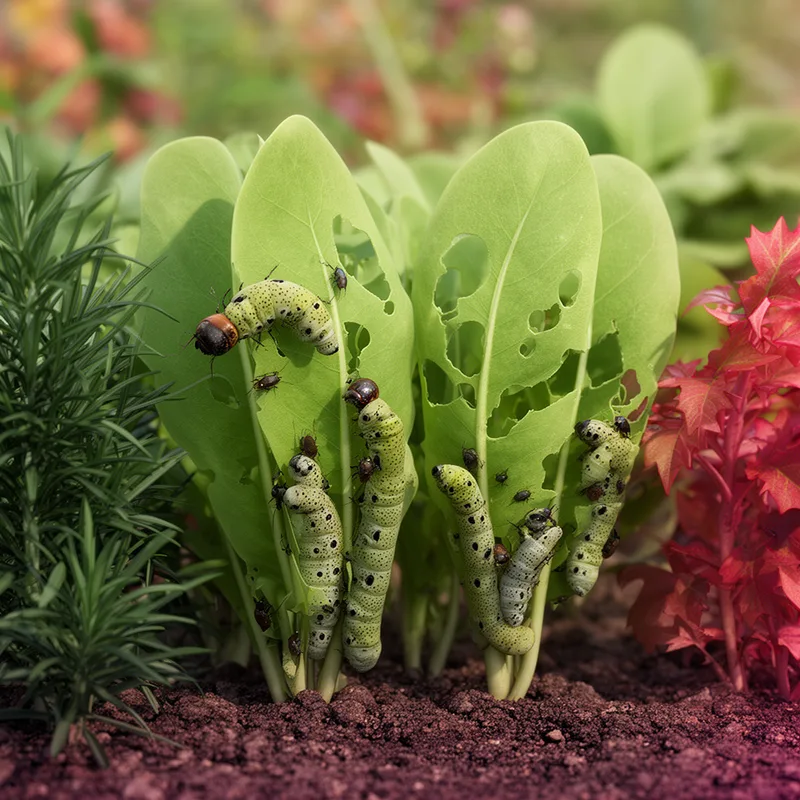
oligophagous
- adjective
- /ˌɑːlɪɡəˈfɛɪɡəs/
- Specialized
- The oligophagous caterpillars can survive on just a few types of host plants, making them vulnerable to changes in their habitat.
- oligophagous species
Examples
-
Insect species that feed on a single genus of host plants were considered monophagous, whereas we recorded species that feed on multiple genera of a single plant family as oligophagous.
Academic text (2010) -
Prerelease studies carried out more than 30 years ago revealed that both species are oligophagous and develop on members of various species of the genera Cirsium (R. conicus) and Senecio (T. jacobaeae), respectively, as well as on related plant genera.
Academic text (2001) -
Of the high-impact species, 48% were classified as monophagous, 22% as oligophagous, and 29% as polyphagous.
Academic text (2010) -
They have been colonized exclusively by oligophagous (six) and polyphagous (six) species.
Academic text (1996) -
Similarly, 44% of the pathogen species were monophagous, three species (19%) were oligophagous, and 37% were polyphagous.
Academic text (2010) -
For example, 68% of the European invaders are mono- or oligophagous (Mattson et al. 1994).
Academic text (1996) -
Oligophagous insects tend to be capable of colonizing confamilial genera, and polyphagous species can generally colonize plants from many different families.
Academic text (1996) -
Nearly half of the insect and pathogen species on our complete list and on the high-impact list, however, were monophagous, whereas only 33% and 29% of the insects, respectively, were polyphagous or oligophagous.
Academic text (2010) -
Some butterflies are oligophagous, only feeding on specific types of flowers, which helps them thrive in certain environments.
-
Many oligophagous insects specialize in consuming a limited range of food sources, which affects their distribution in the ecosystem.
How Selective

Surface Forms
Morphology
oligophagous = oligophagy (opaque) = oligo + phag + ous
Although formed regularly from combining forms, 'oligo-' and '-phag-' are technical Greek-derived elements unfamiliar to average learners, so the meaning is not readily inferable.
Etymology
The word oligophagous comes from Greek parts oligo- meaning 'few' and -phagous meaning 'eating'. Think of oligo- like in oligarchy ('few rulers') and -phagous like 'eat' in esophagus, so an oligophagous animal eats only a few specific kinds of food.

