
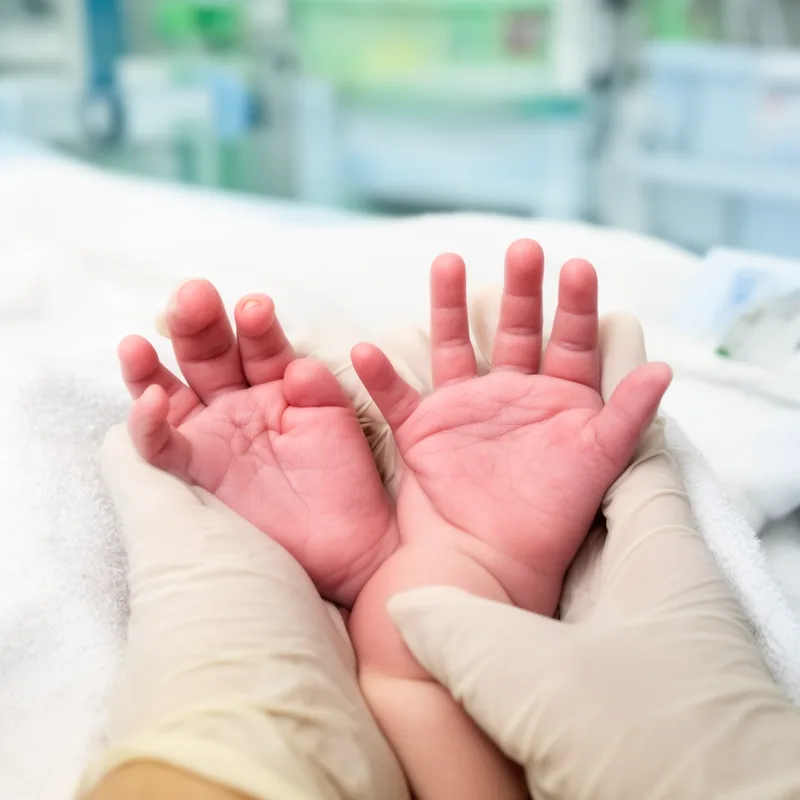
oligodactyly
- noun
- /ˌɑlɪɡəˈdæktəli/
- Specialized
- The doctor diagnosed the newborn with oligodactyly, noting that she was missing two fingers on her left hand.
Examples
-
The doctor diagnosed the newborn with oligodactyly affecting her left hand.
-
Cases of oligodactyly are often detected during routine prenatal scans.
-
He became an advocate for children born with oligodactyly after his daughter was diagnosed.
-
The doctor diagnosed her with oligodactyly at birth.
-
Children with oligodactyly often need special assistance.
-
Children with oligodactyly may require surgery to improve hand function as they grow older.
-
After the birth of her son with oligodactyly, she joined a support group for parents of children with similar conditions.
Synonyms


 1
9.9
A birth condition in which some fingers or toes are missing
A birth condition in which a person has no fingers or toes

A condition where a person is born without fingers or toes
A condition when a person is born missing fingers or toes
Surface Forms
Morphology
oligodactyly = oligodactyl (opaque) = oligo + dactyl + oligo + y
Built from technical Greek combining forms ('oligo-' = few, 'dactyl-' = finger) plus '-y'; these elements are not readily recognized by an average B1 learner, so the meaning is not transparently derivable.
Etymology
Oligodactyly comes from Greek parts oligo- meaning 'few' and dactyl meaning 'finger', a root you can also see in pterodactyl. So oligodactyly literally means 'few fingers' and helps you remember it describes being born with missing fingers or toes.