
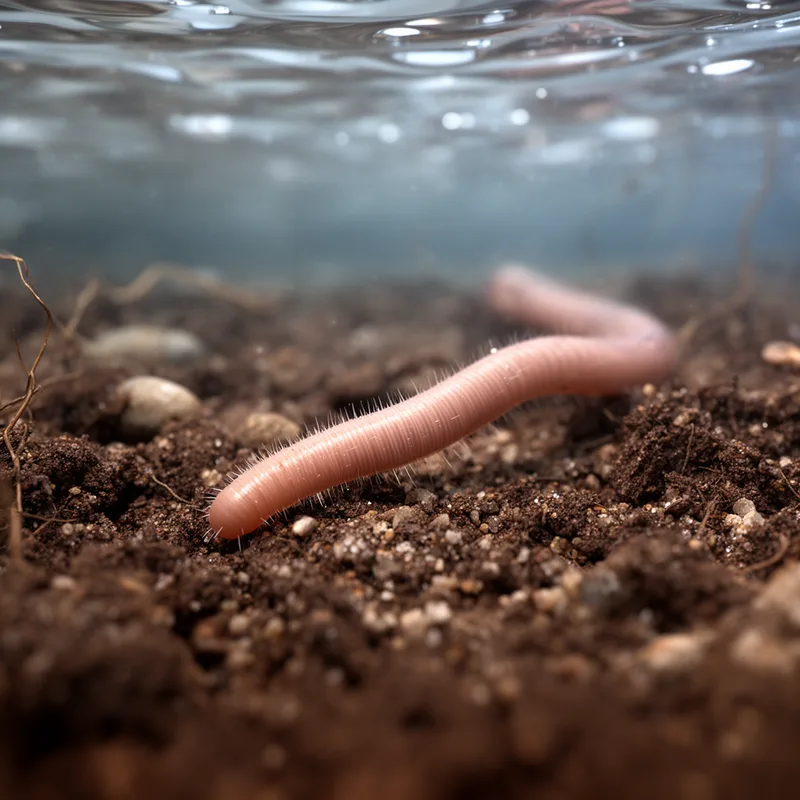
oligochaete worm
- noun
- /ˈɒlɪɡəˌkiːt wɜrm/
- Specialized
- Unlike leeches, oligochaete worms have bristles called setae along their bodies.
Examples
-
The soil in the garden was rich with oligochaete worms that aerated the earth.
-
Many oligochaete worms can be found in freshwater environments.
-
Researchers observed several aquatic oligochaete worms in the pond's sediment sample.
-
The oligochaete worm is essential for soil health.
-
Researchers observed several aquatic oligochaete worms in the pond's sediment sample.
-
The soil in the garden was rich with oligochaete worms that aerated the earth.
-
Many oligochaete worms can be found in freshwater environments.
Synonyms
 299
1.0
299
1.0

A small soft animal without legs that lives in soil or water
 1
9.6
1
9.6
A worm with a long body divided into segments, like an earthworm

A worm with small stiff hairs along its body, like an earthworm

A group of segmented worms like earthworms that have few bristles on each segment

A long soft animal with a body made of many rings, like earthworms and leeches
Surface Forms
Morphology
The phrase is fully compositional: 'oligochaete' denotes a specific kind of bristled annelid, so 'oligochaete worm' simply names a worm of that type. Although technical, the modifier + noun pattern is transparent and a learner who knows both constituents can infer the meaning.
Etymology
Oligochaete worm comes from old Greek words meaning 'few' and 'hair', so it paints a picture of a worm with only a few small hairs along its body. That's why the name helps you remember worms that have single small hairs (bristles) rather than many.