
oligochaete
- noun
- /ˌɑːlɪˈɡoʊkiːt/
- Specialized
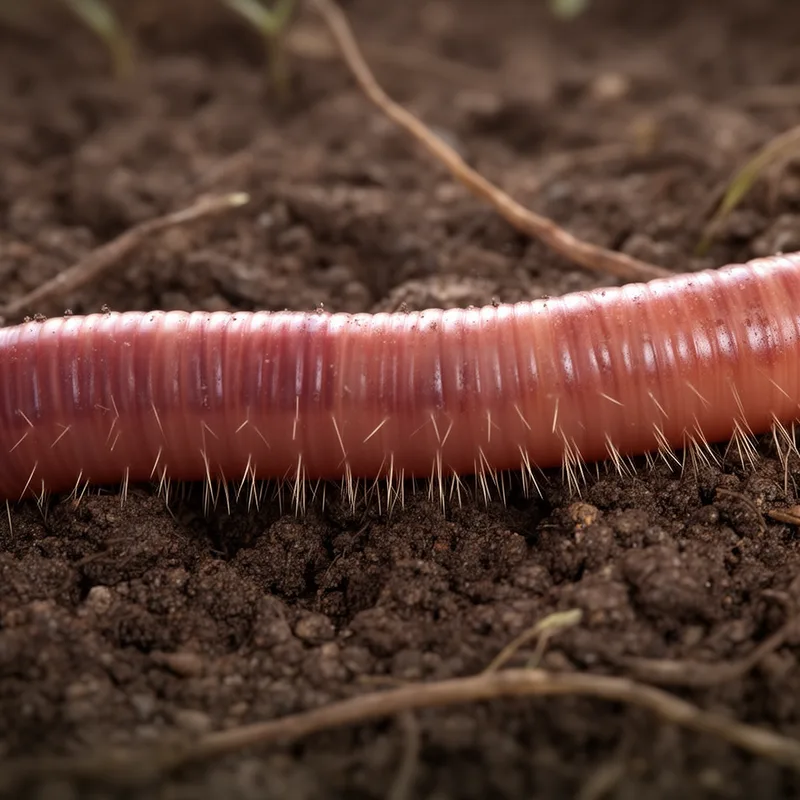
- The oligochaete burrows into the soil, helping to aerate it and improve water drainage.
Examples
-
Farmers often appreciate how the presence of oligochaetes in their fields indicates healthy soil.
-
In the laboratory, students observed the oligochaete under the microscope to study its structure.
-
Diagram: Figure 12. An oligochaete annelid, Figure 2, p. 3, from Cook and Brinkhurst (1973).
Academic text (1996) -
Only one site, the upper estuarine site in the mainstem Cape Fear River (station NAV), showed consistency over time in dominance patterns, with oligochaetes being the most common taxa during all seasons.
Academic text (2002) -
Species richness was measured as the number of taxa (species or genus for most taxa; higher taxa for oligochaetes, nemertea, and platyhelminthes).
Academic text (2002)
Synonyms

A small worm with tiny bristles that lives in soil or water

A group of segmented worms like earthworms that have few bristles on each segment
Compounds
Surface Forms
Morphology
oligochaete = oligo + chaete
A technical scientific formation from Greek combining forms ('oligo-' + 'chaete') that are not productive standalone English morphemes, so knowing common English bases will not let learners derive the meaning.
Etymology
Oligochaete comes from Greek parts oligo- meaning 'few' and chaite meaning 'hair' or 'bristle'. So it names worms that have only a few small bristles along their bodies, which they use to move, like earthworms.

