
oligo


 1
9.9
1
9.9
- noun
- /ˈoʊlɪɡoʊ/
- Specialized
- Single-stranded cDNAs were prepared by use of oligo (dT) priming (Amersham Pharmacia).
- oligo-dT
Examples
-
Further trials should explore the role of fermentable soluble fibers that are FODMAPs: Fermentable Oligo-saccharides, Disaccharides, Mono-saccharides, and Polyols.
Academic text (2014) -
Like tiling arrays, long-oligo arrays work well for pooled samples, but with their lower cost, it is also reasonable to use this technology to genotype large collections of individual plants.
Academic text (2010) -
Indeed, as we will discuss shortly, proteins also become cleaved into oligo peptides.
-
Of course, the delivery is still a major hurdle, and I am sure if we all spend 1% of our time and money, we will have a working and non-toxic delivery technology for not only oligos but for small molecule drugs as well.
Blog text (21) -
The genetic basis of these potentialities is most likely polymorphic genes, but oligo-genetic factors and monomorphic genes play a role.
Academic text (2004) -
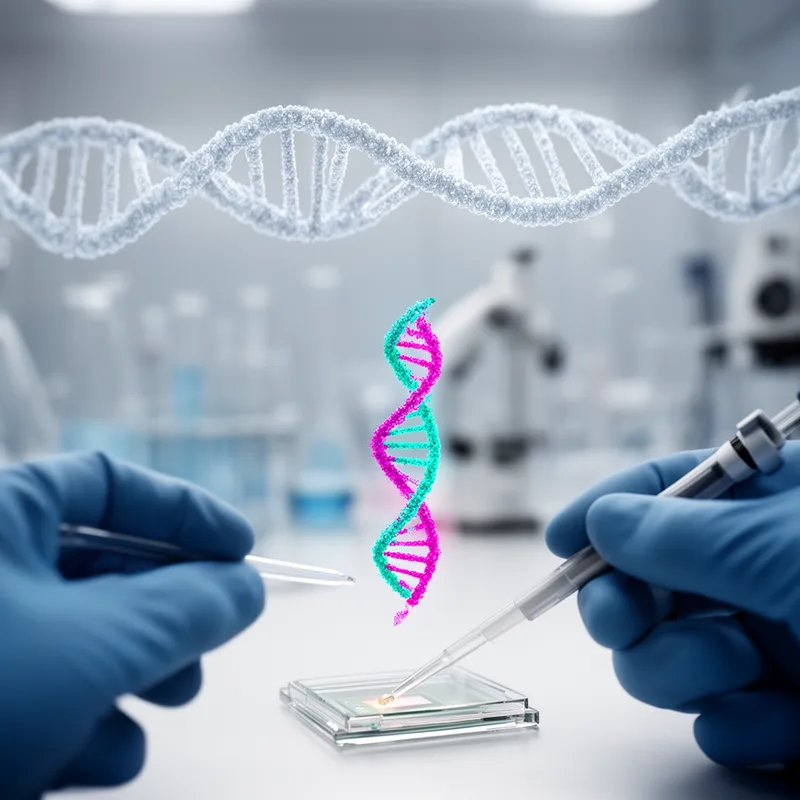
In genetic research, scientists often use an oligo to amplify specific DNA sequences.
-
The technician prepared a solution containing the oligo needed for the experiment.
-
Researchers designed a custom oligo for their study on gene expression.
Synonyms
 1
9.9
1
9.9
A short piece of DNA or RNA used in genetic tests and research
How Long
- Specialized

- Specialized
1
9.9
- Specialized
2
7.9
- Specialized
Surface Forms
Etymology
Oligo comes from the Greek root oligos, meaning 'few'. It is short for oligonucleotide, so an oligo is a short chain made of only a few nucleotide building blocks, and you can remember this from oligarchy ('few rulers') because the oligo part always means 'few'.