
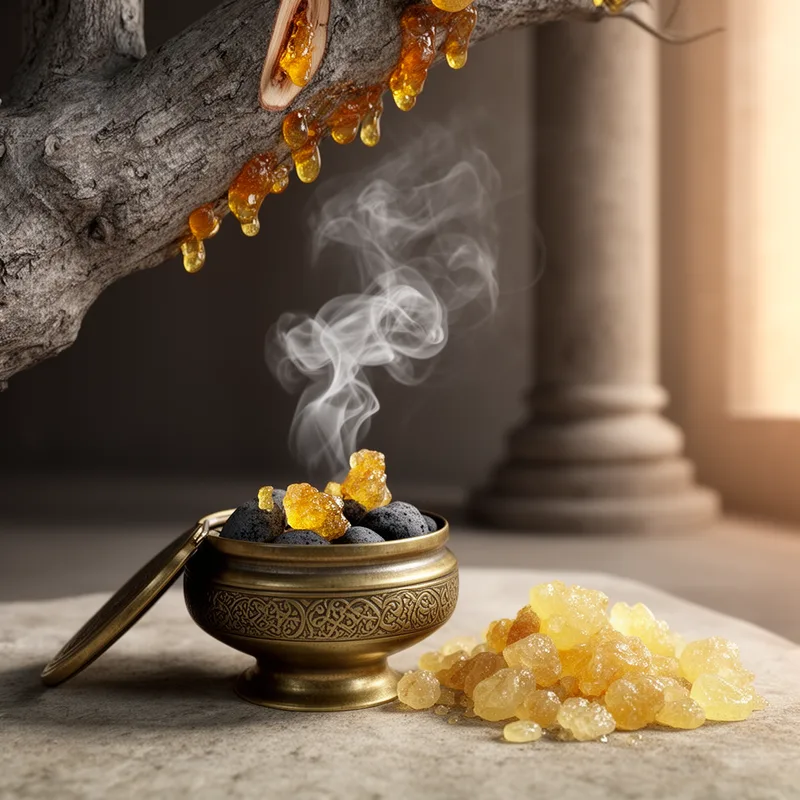
olibanum
- noun
- /ˈoʊlɪˌbænəm/
- The perfumer added olibanum to the blend, enhancing the fragrance with its rich, earthy aroma.
Examples
-
During the ritual, the priest burned olibanum to create a fragrant smoke that filled the temple.
-
The ancient Egyptians used olibanum in their embalming process to preserve bodies for the afterlife.
-
She did not catch the sharp scent of olibanum.
Fiction book (2002)
Synonyms

 8
9.6
8
9.6

Sticky gum from trees with a strong scent used as incense
A fragrant resin from trees burned as incense in religious ceremonies
A strong smelling gum from trees burned in religious ceremonies

A fragrant gum from trees used for perfume and incense
A fragrant resin from trees used in incense, varnish, and perfume

A fragrant sticky gum from plants used long ago in medicine and perfumes

A gum from some plants used in perfumes and incense with a strong bitter smell
Compounds
Surface Forms
Etymology
The word olibanum comes from Arabic al-lubān, meaning 'the milk', because the tree's pale resin looked like milk. It is the same thing as frankincense, so the name fits the scented gum burned as incense and used in ceremonies.