
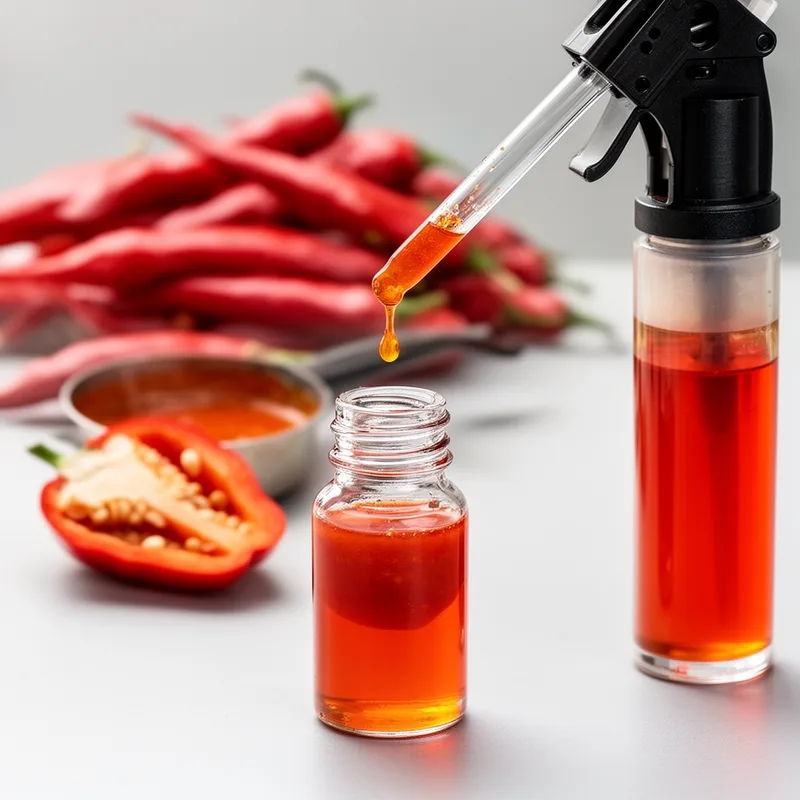
oleoresin capsicum
- noun
- /ˌoʊliˈoʊrɛsɪn ˈkæpsɪkəm/
- Specialized
- Police used oleoresin capsicum spray to disperse the protestors.
Examples
-
The chef added oleoresin capsicum to the sauce for extra flavor.
-
Exposure to oleoresin capsicum can cause severe irritation to the eyes and skin.
-
The chef warned that oleoresin capsicum is extremely potent when used as a seasoning extract.
-
Many brands use oleoresin capsicum in their spicy snacks.
-
The chef warned that oleoresin capsicum is extremely potent when used as a seasoning extract.
-
Many brands use oleoresin capsicum in their spicy snacks.
-
Police used oleoresin capsicum spray to disperse the protestors.
How Spicy
- Specialized
 3
8.2
3
8.2


- Specialized
1
2.7
20
2.5
- US
21
1.6
Surface Forms
Morphology
The term is a straightforward noun-noun combination: 'oleoresin' (a resin/oil blend) + 'Capsicum' (pepper), so a learner who knows both constituents can infer it means the resin/oil extract from capsicum peppers. This is a compositional, scientific naming pattern (akin to 'olive oil', 'pepper extract') and is cross-linguistically transparent, so the meaning is derivable from the parts.
Etymology
Oleoresin capsicum comes from words that mean oleo (oil), resin (a sticky substance), and capsicum (pepper). So it describes the oily, sticky extract of peppers that carries the pepper's heat, which is why people use it both as a strong seasoning and in pepper spray to 'irritate' the eyes and skin.