
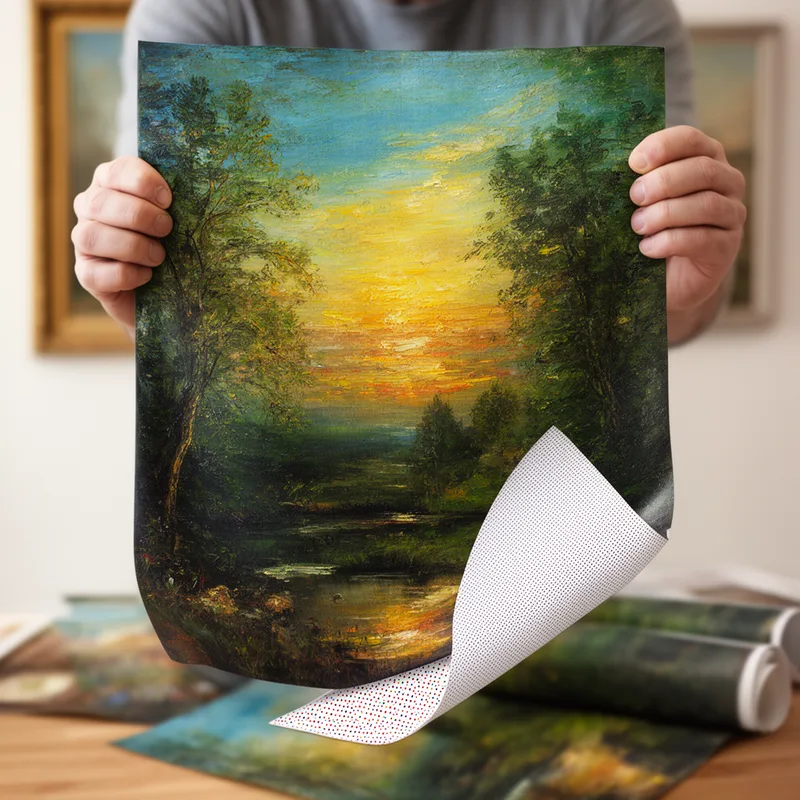
oleography
- noun
- /ˌoʊliˈɑɡrəfi/
- Archaic
- Oleography allowed art lovers to enjoy affordable replicas that closely resembled original oil paintings.
Examples
-
The museum's collection included a rare oleography of a 19th-century landscape.
-
He specializes in the careful restoration of vintage oleography prints for private collectors.
-
The oleography of the 19th century was quite popular.
-
Many artists specialize in oleography today.
-
Oleography allowed art lovers to enjoy affordable replicas that closely resembled original oil paintings.
-
The museum's collection included a rare oleography of a 19th-century landscape.
-
He specializes in the careful restoration of vintage oleography prints for private collectors.
Surface Forms
Morphology
oleography = oleograph (semi-transparent) = oleo + graph + y
The shift from 'oleograph' to 'oleography' is a regular nominalization meaning the art or process associated with making that kind of print.
Etymology
The word oleography comes from the part oleo- meaning 'oil' and -graphy meaning 'writing' or 'picture', the same -graphy in photography. It names a printed picture made to look like an oil painting, so it literally means an 'oil picture'.

