

old-maid's bonnet
- noun
- /oʊld meɪdz ˈbɒnɪt/
- Specialized
- The vibrant blue flowers of the old-maid's bonnet attract many native pollinators.
Examples
-
Gardeners value the old-maid's bonnet for its hardy nature and ornamental appeal.
-
We spotted an old-maid's bonnet growing by the woodland trail.
-
The garden was full of beautiful old-maid's bonnets.
-
I planted an old-maid's bonnet in my backyard.
-
Gardeners value the old-maid's bonnet for its hardy nature and ornamental appeal.
-
The vibrant blue flowers of the old-maid's bonnet attract many native pollinators.
-
We spotted an old-maid's bonnet growing by the woodland trail.
Synonyms
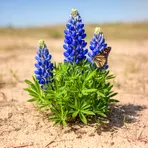
A wild plant with leaves like a hand and bright blue flowers that grows in sandy open soil
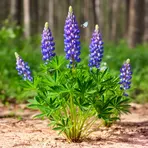
A plant that grows in eastern North America with leaves like a hand and groups of blue flowers

A strong, long-lived flowering plant with blue flowers that grows in eastern and central North America

A strong plant from eastern and central North America that lives many years with palm-like leaves and blue flowers
Surface Forms
Morphology
old-maid's + bonnet
The constituents 'old-maid' (an unmarried older woman) and 'bonnet' (a small hat) create a clear image, so a learner might infer something hat-shaped or named after a hat. However, the phrase refers specifically to a particular perennial plant whose name is metaphorical; knowing the words alone would not reliably tell a B1 learner that it is a plant species with blue flowers, so the relation is only partially predictable.
Etymology
Old-maid's bonnet comes from the flower's shape: the bright blue blossom looks like a small bonnet that an old maid, an older unmarried woman, might wear, so people used that image to name the 'plant'.

