
octane rating


 1
4.6
1
4.6
- noun
- /ˈɑkˌteɪn ˈreɪtɪŋ/
- Specialized
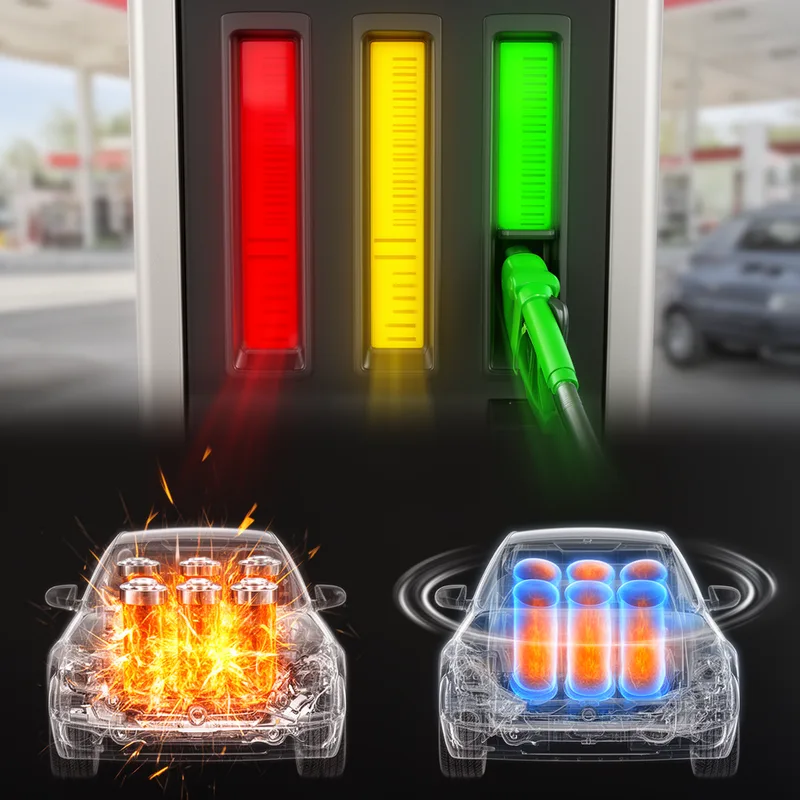
- The higher a fuel's octane rating, the less likely it is to ignite from pressure alone.
- high octane rating
Examples
-
Another 5% would have a minor effect on octane rating, but a major effect on fuel-system components spec'd for no-ethanol or 10%.
Blog text (10) -
Higher ethanol produces higher octane ratings.
Blog text (10) -
Higher ethanol percentages yield a lower Octane rating and lower mileage per gallon.
Blog text (10) -
Regular gasoline has an octane rating of 85-87; ethanol has a comparative octane rating of 115.
-
A fuel with a high octane rating can help prevent engine knocking and improve performance.
Synonyms
A number that shows how well fuel resists knocking in car engines
How Resistant
- Specialized
1
6.8

- Specialized
1
4.6
Surface Forms
Morphology
The meaning is directly compositional: 'rating' (a measured score) of 'octane' (a fuel-related hydrocarbon), so a learner who knows both constituents can infer it refers to a measure of octane quality / anti-knock properties. Although somewhat technical, the noun+noun composition is predictable and mirrors similar constructions in other languages, making the sense derivable from the parts.
Etymology
Octane rating comes from the chemical octane, whose name begins with 'oct' for eight, and the word rating meaning a number. Early testers compared fuels to pure octane to see if they caused 'knocking' in engines, so the octane rating became the number that shows how well a fuel prevents 'knocking'.