

ocotillo
 1
9.9
1
9.9

- noun
- /ˌoʊkəˈtiːjoʊ/
- US
- After the rain, the ocotillo shrub burst into vibrant clusters of red flowers.
- thorny ocotillo
- ocotillo branches
- ocotillo cactus
Examples
-
We noticed the slender, curved branches of ocotillo framing two huts built in traditional Seri style.
Academic text (1997) -
I looked out the window: pickleweed, ocotillo, the great bowl of weepy sky.
Fiction book (2002) -
The people of the village took him to a house made of sticks of ocotillo and covered with mud.
Fiction book (2000) -
The ocotillo in the yard unfurls its leaves slowly.
Fiction book (2002) -
This noon in April, the mountains are hot, and the wind shakes the ocotillo in my yard.
Fiction book (2002) -
We live beneath the ocotillo shelters and grill our fish over small campfires on the beach the way my people have always done.
Academic text (1997) -
There were no cacti here, only low scrubby bushes and skeletal ocotillo not yet in bloom.
Fiction book (2002) -
She gathered roots of the guayacan for men's fevers and the roots of ocotillo for swellings.
Fiction book (1995) -
Out there, where we at first didn't know Joshua from yucca, from cholla, from ocotillo, the three of us got up each morning with nothing recognizable around except one another and the weary Ford.
Fiction book (1993) -
She's been stirring every evening, sometimes walking out to the steep hillside behind her house or up the empty road gathering twigs and dry husks of ocotillo and saguaro, which she puts in a woven bag she carries over her shoulder.
Fiction book (2002)
Synonyms
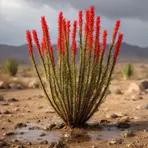
A spiny desert shrub with long stems and red flowers after rain
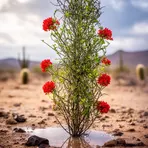
A desert plant with thin spiny branches that makes leaves and red flower clusters after rain
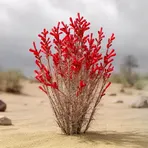
A desert shrub with thin spiny branches and bright red flowers after rain

A desert shrub with thin spiny branches that makes red flowers after rain in the southwestern United States and Mexico
Surface Forms
Etymology
Ocotillo comes from Mexican Spanish and from the Nahuatl word ocotl, which meant 'pine' or 'torch'. That's why the name fits: the plant's tall, spiny stems and bright red flowers look like little torches in the desert after rain.