
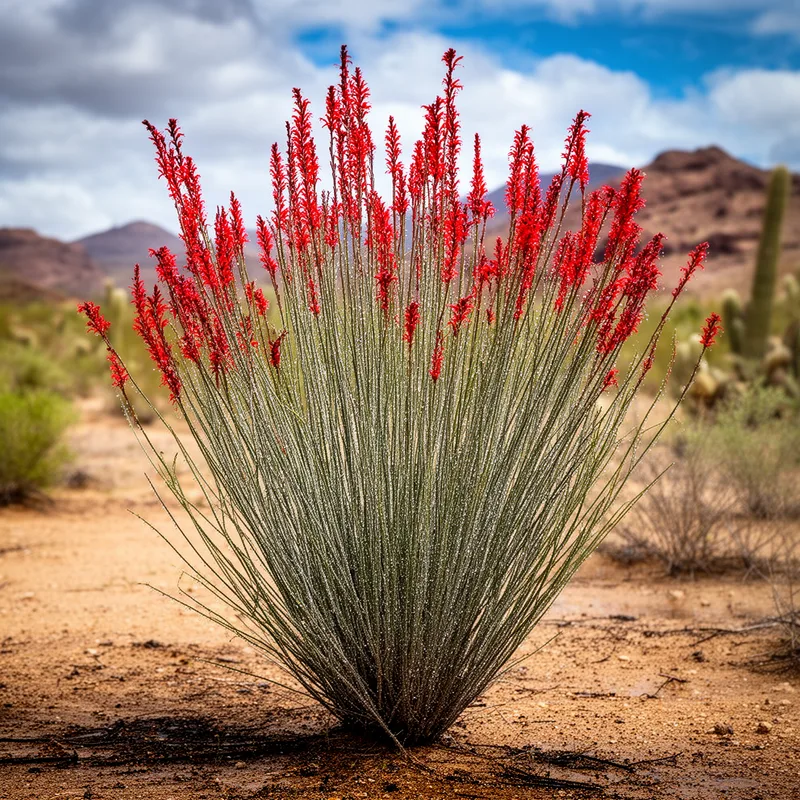
coachwhip
- noun
- /ˈkoʊtʃwɪp/
- US
- The coachwhip blooms brilliantly after the first heavy desert rains.
Examples
-
The coachwhip is known for its vibrant red flowers that appear after the rainy season.
-
We spotted a coachwhip growing near the rocky hills outside Tucson.
-
Many animals use the dense branches of the coachwhip as shelter in the harsh desert climate.
-
The coachwhip plant thrives in arid conditions.
-
Many coachwhips bloom beautifully after the rains.
-
In the desert, the coachwhip provides crucial shelter for various wildlife.
-
After the rainfall, we saw a beautiful coachwhip with its slender branches covered in leaves.
Synonyms

 1
9.9
1
9.9

A desert shrub with thin spiny stems that grow leaves and red flowers after rain

A spiny desert shrub with long stems and red flowers after rain

A desert shrub with thin spiny branches and bright red flowers after rain

A desert plant with thin spiny branches that makes leaves and red flower clusters after rain
Compounds


Surface Forms
Morphology
Etymology
Coachwhip comes from the words coach and whip, because the plant's long, thin, twisting branches look like the long whip used on a coach. So the name helps you remember the shrub by its whip-like branches that later grow leaves and red flowers after the rain.