

to occupy
 92
3.3
92
3.3

- verb
- /ˈɑːkjəˌpaɪ/
- Secondly, they occupy much less parking space.
- occupy space
- occupy an area
- occupy habitats
Loading YouTube…
Watch on YouTubeMatter is anything that occupies space and has mass.
- Matter is anything that occupies space and has mass.
- He also gives you the list of his works, which occupies more than one page.
- But those bodies then have to occupy space and time.
- But also they occupy space and provide fresh, you know, food.
- It's how much mass you have in the volume that you occupy.
- Say it again, this experience occupies A finite amount of time and it will come to an end.
- But then also make that be all the more reason to take up the space you occupy, to use your voice to take that risk.
- The Simpsons should occupy a base eight world.
- He happens to occupy the right time and place.
- Like which subset of IHC does it occupy the current?
- But before we get onto that, occupying the space in between willingness.
- Indeed, they have think how to occupy such a space.
- Why doesn't he step aside and let a real writer have that occupy that, that stall?
Examples
-
They occupy almost every aquatic bioregion on the planet.
-
Department stores usually occupy two floors.
-
But also they occupy space and provide fresh, you know, food.
-
So the main thing we're trying to do when we make the cooling path is to occupy as much of the space as possible.
-
The three exotic urban bird species also appear to occupy different urban habitats.
Academic text (2008) -
In London, however, ethnic businesses and neighborhoods occupy areas close to the city's historic core.
Academic text (2008) -
The front porch, in general, occupies an interesting place in the collective imagination.
Academic text (2011) -
Furthermore, as rebuilt homes became occupied, the residents embellished them with personal touches.
Academic text (2011) -
Population estimates range from 500,000 to as many as 1.5 million people occupying about 400 square miles.
Academic text (2011) -
The children will occupy the playground for hours during the summer.
Synonyms
 ∞
1.0
∞
1.0
Need a certain amount of time or space
 ∞
1.0
∞
1.0
To make a place full by putting people or things into it
 179
3.5
179
3.5
To use a large part of time, space, or attention
 106
3.7
106
3.7
Fill a place with people or animals
 90
1.3
90
1.3
Close a hole or gap by putting material into it
 44
3.6
44
3.6
To be present inside a person's mind or feelings

 1
5.6
1
5.6
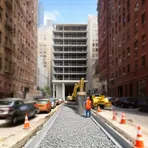
To fill a space with material or build on empty land between buildings in a city
Phrasal Verbs
How Full

Surface Forms
Etymology
Occupy comes from an old Latin word occupare, with capere meaning 'to take' and the same root as capture, so when something occupies space or time it 'takes up' that space or time.