

nucleotide
 14
6.6
14
6.6

- noun
- /ˈnjuːklɪˌtaɪd/
- Specialized
- Each nucleotide of a single-stranded DNA is corresponded with a specific nucleotide on the other strand.
- nucleotide sequence
- nucleotide polymorphism
- nucleotide substitution
Loading YouTube…
Watch on YouTubeGATS&C;'s are the four nucleotide letters in the DNA alphabet.
- GATS&C;'s are the four nucleotide letters in the DNA alphabet.
- And finally, an oligonucleotide is a run of DNA nucleotides, a run of DNA.
- There they undergo chemical reactions which create the nucleotides.
- Folate is essential for the incorporation of thymine adna nucleotide into DNA.
Examples
-
His patent-pending assay works by homing in on a tiny nucleotide region that's unique to the ASR fungus.
Academic text (2006) -
Genes are identified by the letters AGTC, representing the base chemical nucleotide pairings of Adenine, Guanine, Thymine, and Cytosine.
Academic text (2005) -
There are traces of a second DNA pattern in his nucleotide structure.
-
Only a few percent of the nucleotides differ from one species to the next.
Fiction book (1990) -
DNA is made of compounds called nucleotides, which are commonly referred to by one letter.
-
Detailed information on patient samples submitted for nucleotide sequencing is provided in the table.
Academic text (2012) -
Let's firstly talk about the difference between the nucleotides in RNA and DNA.
-
The researchers analyzed 32 BMI-associated single nucleotide polymorphisms, or SNPs, previously linked to BMI.
Academic text (2015) -
DNA is made of compounds called nucleotides, which consist of a nucleoside and a phosphate group.
-
A string of three nucleotides forms a codon, which is essential for the genetic code.
Synonyms
 23
8.8
23
8.8
A chemical part that makes up DNA or RNA

A small molecule that is the single unit of DNA or RNA, with a sugar, a base, and a phosphate

A building block of DNA with a deoxyribose sugar

A small molecule that makes up RNA and has a sugar, phosphate, and a base
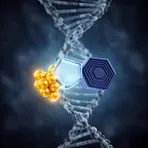
A building block of DNA made of a sugar, a phosphate, and the base guanine

A small molecule used to build DNA made from the base cytosine and one phosphate

A small molecule made of thymine, a sugar, and one phosphate that builds DNA
Compounds
- Specialized
A chemical that helps enzymes transfer energy during cell processes

- Specialized
A small change in a gene where one DNA letter is different
How Long

Surface Forms
Morphology
nucleotide = nucleoside (opaque) = nucleo + tide
The word is built from specialized biochemical combining forms ('nucleo-' and '-tide') and the relation to everyday English words is not inferable by an average B1 learner.
Etymology
The word nucleotide comes from nucle- meaning 'kernel' or 'center', the same root you see in nucleus, and from -tide, a part used to name small units like nucleoside. So a nucleotide is a small 'building block' that makes up DNA and RNA.