
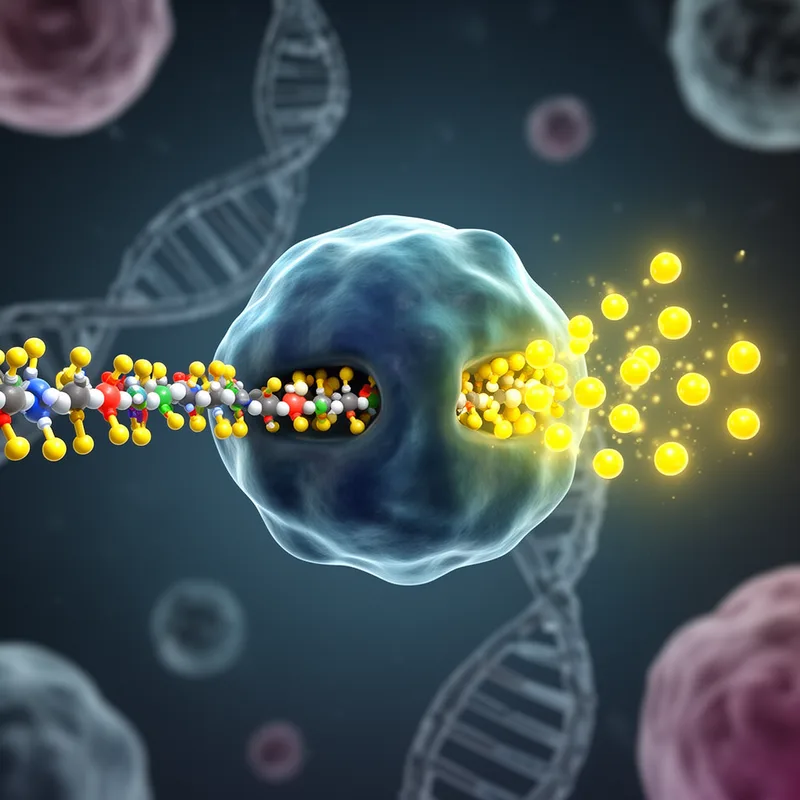
nucleotidase


 1
9.9
- noun
- /ˌnjuːkliˈoʊtədeɪs/
- Specialized
- The liver produces nucleotidase to help process nucleotides by removing their phosphate groups during metabolism.
Examples
-
Researchers measured the activity of nucleotidase in different tissue samples.
-
A deficiency in nucleotidase can affect the breakdown of nucleotides in the body.
-
The liver produces nucleotidase to help process nucleotides during metabolism.
-
The nucleotidase enzyme plays a crucial role in DNA metabolism.
-
Many nucleotidases are involved in cellular signaling pathways.
-
Researchers measured the level of nucleotidase activity in various tissue samples to study nucleotide breakdown.
-
A deficiency in nucleotidase can lead to issues in the body's ability to break down nucleotides effectively.
Surface Forms
Morphology
nucleotidase = nucleotide (semi-transparent) = nucleotide + ase
The suffix '-ase' is commonly used to denote enzymes, but understanding the specific function of 'nucleotidase' requires specialized knowledge.
Etymology
Nucleotidase comes from nucle- (from nucleus) meaning 'core' or 'center', and the ending -ase, a common enzyme ending you see in words like lipase. So a nucleotidase is an enzyme that works on nucleotides, the 'core' building blocks of DNA and RNA, and helps 'break down' those molecules by removing their phosphate parts.