
nucleoid


 1
9.4
- noun
- /ˈnjuːkliˌɔɪd/
- Specialized
- Scientists study the nucleoid to understand how bacteria manage their genetic material.
Examples
-
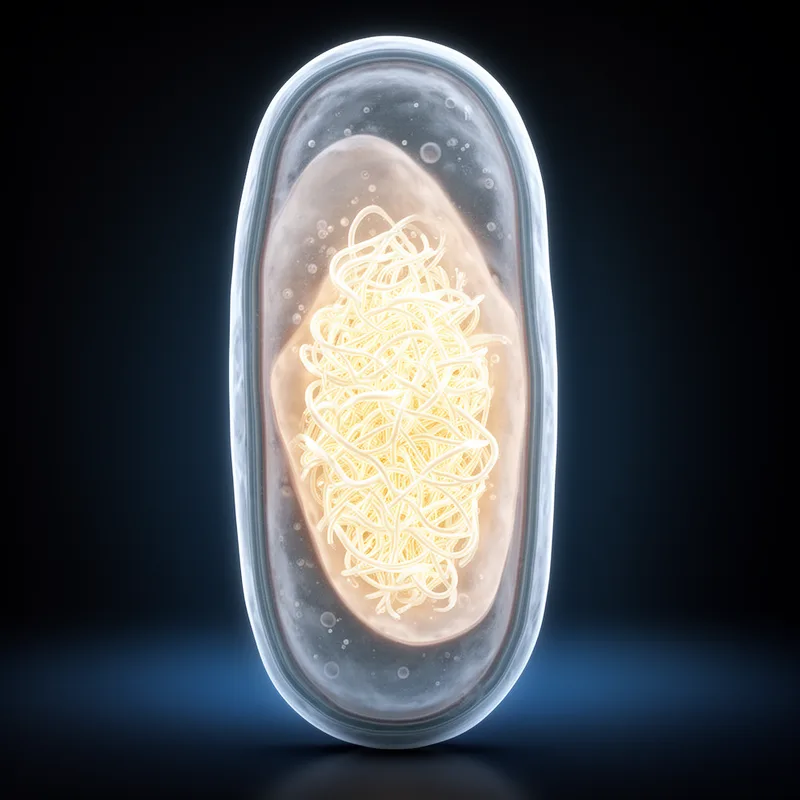
The nucleoid is where the DNA is kept in a prokaryotic cell.
-
And the only other real structure you can see in this case is this nucleoid structure in the middle.
-
Unlike eukaryotic cells, prokaryotic cells contain a nucleoid instead of a nucleus.
Surface Forms
Morphology
nucleoid = nucleus (semi-transparent) = nucle + oid
Formed from 'nucleus' + the technical suffix '-oid' meaning 'resembling'; understandable to learners who know 'nucleus' and scientific suffixes but '-oid' is somewhat specialized.
Etymology
Nucleoid comes from nucleus, a Latin word meaning 'kernel' or 'little nut', and the ending -oid, meaning 'like' or 'in the shape of'. So a nucleoid is the part of a simple cell that is 'like a nucleus' because it holds the DNA but has no membrane, which explains the modern meaning.