

northern white cedar
- noun
- /ˈnɔrðərn waɪt ˈsiːdər/
- Specialized
- Many gardeners prefer northern white cedars for hedges.
Examples
-
The northern white cedar thrives in moist, well-drained soil.
-
The lumber from northern white cedar is valued for its resistance to decay.
-
Many wildlife species rely on the northern white cedar for shelter during the winter.
-
The northern white cedar is often used for privacy hedges in suburban yards.
-
The northern white cedar is often planted as an ornamental tree in gardens.
-
In landscaping, the northern white cedar serves as an effective hedge due to its dense foliage.
-
Many homeowners choose the northern white cedar for its ability to withstand cold climates and create beautiful privacy barriers.
Synonyms


 1
4.2
1
4.2
A slow-growing evergreen tree with wood that smells nice and resists rot

A small evergreen tree with tiny flat leaves often used for hedges
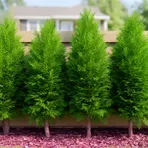
A small tree that stays green all year with tiny flat leaves used for garden hedges
Surface Forms
Morphology
The noun phrase is a straightforward combination of modifiers and a noun: 'northern' (from the north) + 'white' (color/appearance) + 'cedar' (a type of evergreen tree). A B1 learner who knows these constituent meanings can readily infer it denotes a kind of cedar tree characterized by whiteness and northern distribution, so the meaning is compositional and transparent.
Etymology
Northern white cedar explains the tree: northern shows where it grows, white points to its pale wood, and cedar was a name early settlers used because its wood smells like 'true cedars'. So today the name simply labels a small evergreen tree with pale wood that does not rot easily.