

Thuja occidentalis
- noun
- /ˈθuːdʒə ɒkɪˈdɛn.təl.ɪs/
- Specialized
- The gardener planted a Thuja occidentalis in the corner of the yard to provide year-round greenery.
- Thuja occidentalis cedar
- white Thuja occidentalis
Examples
-
The Thuja occidentalis is often used in landscaping for its attractive shape and resilience to cold weather.
-
In Canada, Thuja occidentalis is commonly referred to as northern white cedar and is valued for its durability.
-
It contains Melaleuca alternifolia and Thuja occidentalis.
Blog text (19)
Synonyms
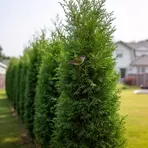
A small evergreen tree in eastern North America with tiny flat leaves often used for hedges
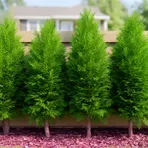
A small tree that stays green all year with tiny flat leaves used for garden hedges
Surface Forms
Morphology
Thuja + occidentalis
This is a Linnaean binomial composed of the genus name 'Thuja' and the Latin epithet 'occidentalis' (meaning 'western'), so a learner who knows both constituents can infer it denotes a particular type/variety of Thuja (i.e., a western Thuja). Botanical Latin names are compositional and follow predictable patterns across languages, making the basic meaning derivable from the parts.
Etymology
Thuja occidentalis may come from old words for a fragrant tree and for the word 'western'. The first part, Thuja, was used for trees that had a strong smell, and occidentalis means 'western', so the name points to the fragrant western tree we now call the 'northern white cedar'.

