
nonself


 1
9.9
The Buddhist idea that a person has no permanent self
- noun
- /nɒnˈsɛlf/
- Jargon
:
no-yo
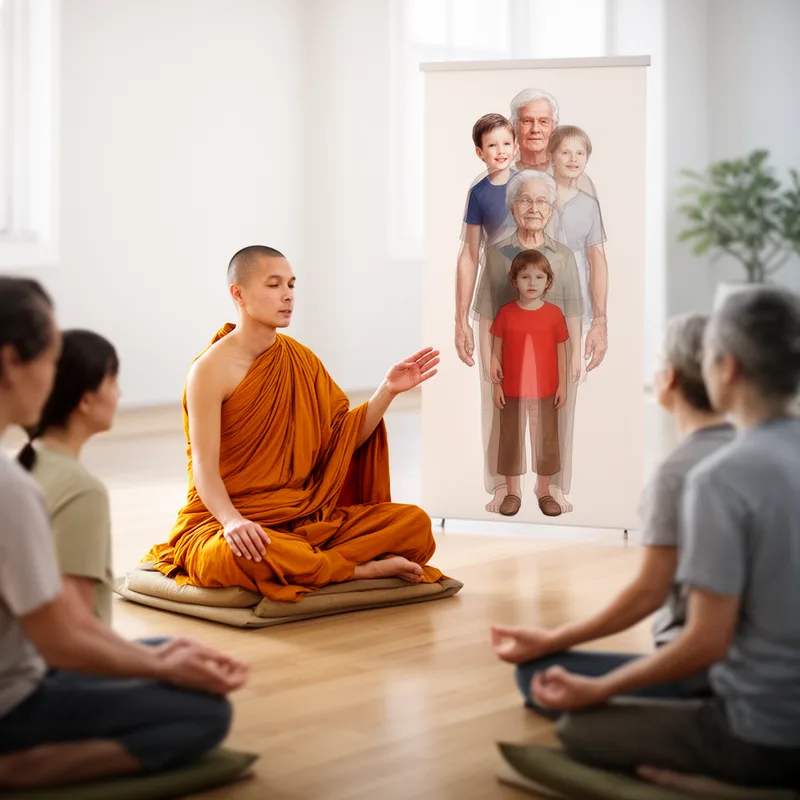
- In Buddhism, understanding nonself helps individuals realize that their identity is not fixed and can change over time.
Examples
-
It is at these "synapses" that the continual redefining of the self/nonself (culture/nonculture) boundary takes place.
Academic text (1998) -
There is an identifiable pattern of psychophysical behaviors and changes that facilitates this continual interplay between inner and outer self and nonself at all levels.
Academic text (1998) -
The teaching of nonself encourages practitioners to let go of attachments to a permanent identity.
-
Meditating on nonself can lead to a deeper understanding of the nature of existence.
Synonyms


Antonyms

Surface Forms
Morphology
Etymology
Nonself comes from the prefix non- meaning 'not' and self meaning 'the person', and it is used to translate the Buddhist word anatta meaning 'no-self'. So in Buddhism nonself means there is no fixed, unchanging 'I', which is why the idea helps people let go of attachments.