
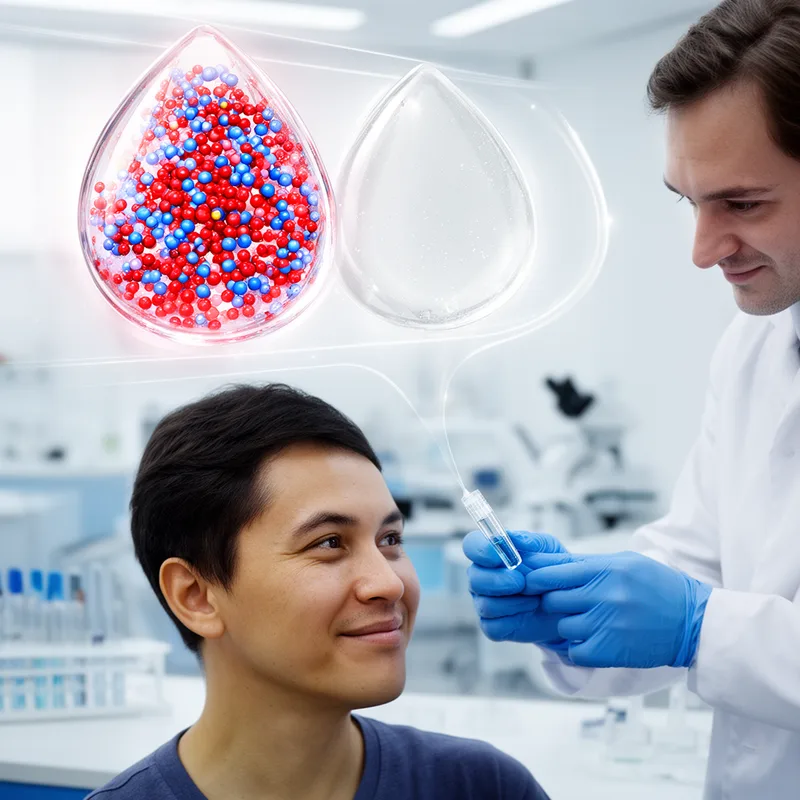
nonsecretor
- noun
- /ˌnɒn.sɪˈkriː.tər/
- Specialized
- The researchers noted that nonsecretor individuals tend to have different responses to certain viruses compared to secretors.
Examples
-
A study found that approximately 20% of a certain population are classified as nonsecretor, meaning their saliva lacks specific blood group antigens.
-
No nonsecretors who were carrying the G428A FUT2 mutation were infected with NoV (9, 14).
Academic text (2012) -
Thought you might be interested in knowing Matt Petersen's A positive and a nonsecretor.
Fiction book (1990) -
Persons with a nonsecretor gene (FUT2-/-) represent as much as 20% of the European population.
Academic text (2013) -
Each person was classified as a homozygous secretor (SeSe), a heterozygous secretor (Sese428), or a nonsecretor (se428se428).
Academic text (2012) -
However, in contrast to the case with NoV, neither the G428A nonsecretor mutation nor any of the ABO blood groups or Lewis phenotypes protected children against SaV infection. Acknowledgments
Academic text (2012) -
Doctors often identify a patient as a nonsecretor when their tests show no presence of particular blood group antigens in their bodily fluids.
Antonyms

- Specialized
 1
7.8
1
7.8

A person or organism that releases certain substances into fluids like saliva
How Secretory
- Specialized
1
7.8

- Specialized
Surface Forms
Morphology
Etymology
Nonsecretor comes from non- ('not') and secrete ('to release'). As a noun, it names a person whose body fluids, like saliva, do not show certain blood markers, so doctors call someone a nonsecretor when those markers are missing.