
nonphagocytic
- adjective
- /nɒnˌfæɡəˈsɪtɪk/
- Specialized
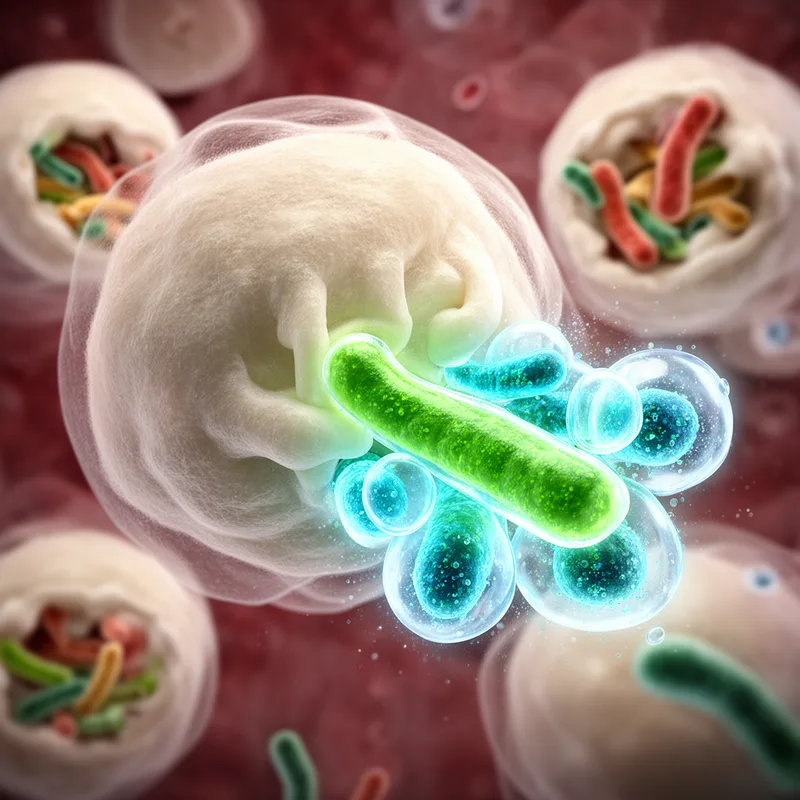
- Some pathogens are nonphagocytic, allowing them to persist in the body despite immune responses.
Examples
-
The nonphagocytic bacteria survived in the immune system.
-
The bacteria's thick capsule made it nonphagocytic and difficult for immune cells to destroy.
-
Researchers studied how nonphagocytic organisms evade the body's natural defenses.
-
Some cells are nonphagocytic and do not respond to pathogens.
-
Certain bacteria are considered nonphagocytic because they cannot be easily engulfed by the immune system's cells.
-
The research highlighted that some cells are nonphagocytic and therefore do not participate in the process of phagocytosis.
-
In studying immune responses, scientists found that nonphagocytic organisms can evade detection by phagocytic cells.
Antonyms


Surface Forms
Morphology
nonphagocytic = phagocytic (transparent) = non + phagocytic
The prefix 'non-' straightforwardly negates 'phagocytic', yielding 'not capable of phagocytosis'.
Etymology
Nonphagocytic breaks into non- 'not' and phag- 'to eat', so it literally means 'not eaten'; a nonphagocytic bacterium is one that immune 'eating' cells cannot swallow and destroy.