
nonpasserine bird
- noun
- /nɒnˈpæsəraɪn bɜrd/
- Specialized
- Unlike sparrows, nonpasserine birds often have different foot structures and nesting habits.
Examples
-
Many nonpasserine birds are known for their vibrant plumage and unique calls.
-
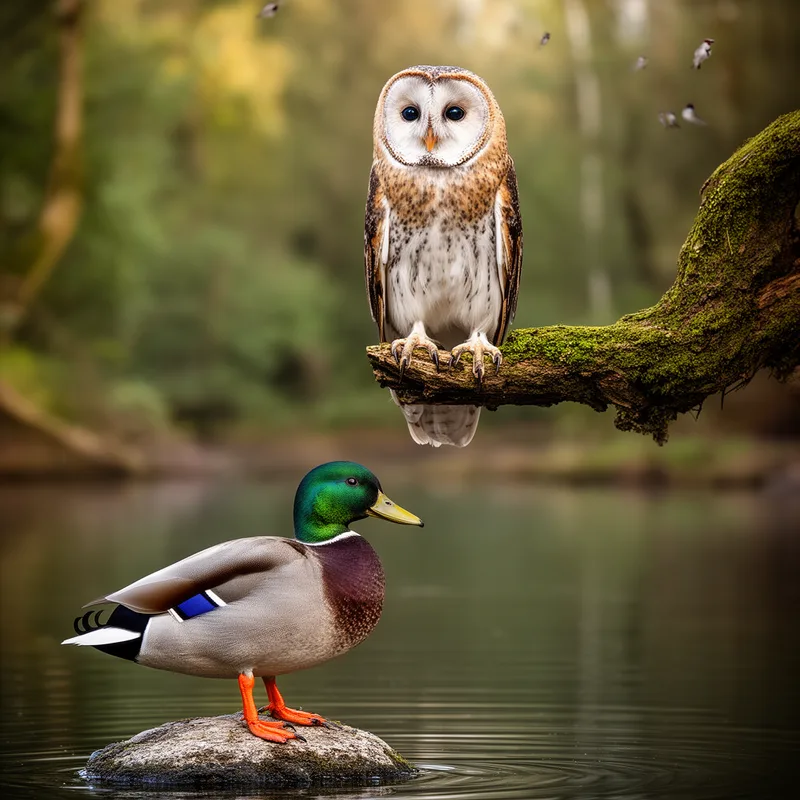
The nonpasserine bird perched quietly on a branch, blending into the surrounding foliage.
-
The nonpasserine bird perched on the branch.
-
Many nonpasserine birds are colorful and vibrant.
-
Many nonpasserine birds are known for their vibrant plumage and unique calls.
-
The nonpasserine bird perched quietly on a branch, blending into the surrounding foliage.
-
Unlike sparrows, nonpasserine birds often have different foot structures and nesting habits.
Surface Forms
Morphology
The phrase is transparently compositional: 'nonpasserine' (not a passerine) combined with 'bird' yields 'a bird that is not a passerine (i.e. not in the order Passeriformes)'. Although 'nonpasserine' is specialist vocabulary, the negation prefix and head noun composition follow regular morphological patterns, so a learner who knows the constituent words can derive the meaning.
Etymology
The term nonpasserine bird comes from the parts non- (meaning 'not') and passerine (the sparrow-like, perching birds you often see on branches). So, nonpasserine bird means 'not' a perching, sparrow-like bird and helps you remember these birds often have different feet, nests, or brighter colors.

