

nonconservative
- adjective
- /ˌnɒnkənˈsɜːrvətɪv/
- Specialized
- Friction is a nonconservative force because it dissipates energy as heat.
Examples
-
In physics, air resistance is considered a nonconservative force since it removes energy from the system.
-
Unlike gravity, a nonconservative force does not allow energy to be fully recovered.
-
The nonconservative forces in this system cause energy loss.
-
In physics, nonconservative forces are crucial to understanding energy transfer.
-
Friction is a nonconservative force because it dissipates energy as heat.
-
In physics, air resistance is considered a nonconservative force since it removes energy from the system.
-
Unlike gravity, a nonconservative force does not allow energy to be fully recovered.
Synonyms
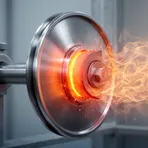
Losing energy, often as heat, to the area around it
How Conservative
- Specialized

- Specialized
Surface Forms
Morphology
nonconservative = conservative (semi-transparent) = non + conservative
Form is clearly 'non-' + 'conservative', but the technical physics sense of 'conservative' (conserves energy) is specialized and not known by many learners.
Etymology
Nonconservative comes from the parts non- 'not' and conservative, from conserve 'to keep'. In physics a nonconservative force does not 'keep' energy in the system but turns it into heat or other forms, so the energy cannot be fully recovered.

