
dissipative
- adjective
- /ˈdɪsɪpeɪtɪv/
- Specialized
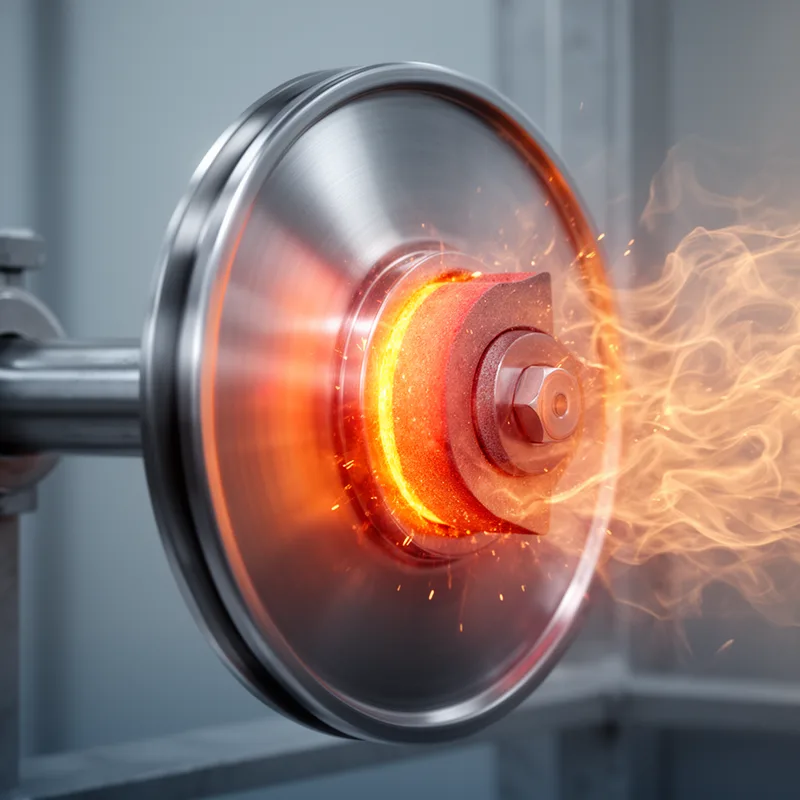
- In thermodynamics, a dissipative process is one where energy is transformed and lost to the environment.
- dissipative system
- dissipative effects
- dissipative structures
Loading YouTube…
Watch on YouTubeNow there's a field in in called dissipative structures.
- Now there's a field in in called dissipative structures.
- Think about those products where they use is of necessity dissipative.
Examples
-
We should add some damping, we should add some dissipative forces.
-
In dissipative fluids, mathematical and physical properties are no longer conserved, and during the process, we lose part of the original information.
Academic text (1996) -
Thus, energy must be continually supplied to get the dissipative structure to form and maintain itself.
Academic text (2010) -
Those flows, they are dissipative, which simply means they involve wear and tear.
-
In an ideal fluid, there are no dissipative effects; this means that fluid structures cannot diffuse or die out freely.
Academic text (1996) -
Studying the pattern dynamics may yield insight into basic mechanisms of granular flow and connect these patterns to those found in other dissipative systems.
Academic text (1995) -
Theirs was a model of an open and dissipative system that organizes itself into a critical state by its intrinsic dynamics, independent of any control parameter.
Academic text (2005) -
The dissipative nature of the mechanism corresponding to the irreversible term means that even random fluctuations, such as those that might arise from a simple two-state nonequilibrium chemical reaction, can drive transport.
Academic text (2002) -
Although in real fluids these structures may be rather evanescent (because of dissipative effects), their lifetime can be long enough for them to transport physical properties efficiently throughout the fluid, making them important mediators between different stages of fluid evolution.
Academic text (1996) -
In a dissipative system, energy is lost as heat to the surroundings, which prevents it from operating indefinitely.
Synonyms


 1
4.1
1
4.1
A process that gives off energy, for example burning or digestion

A chemical reaction or substance that gives off heat
A force that removes energy from a system so the energy cannot be fully recovered
Antonyms

How Dissipative

Surface Forms
Morphology
Etymology
Dissipative comes from the verb dissipate, which comes from Latin dissipare meaning 'scatter'. In science, a dissipative system 'scatters' useful energy as 'heat', so it slowly loses energy to its surroundings.