
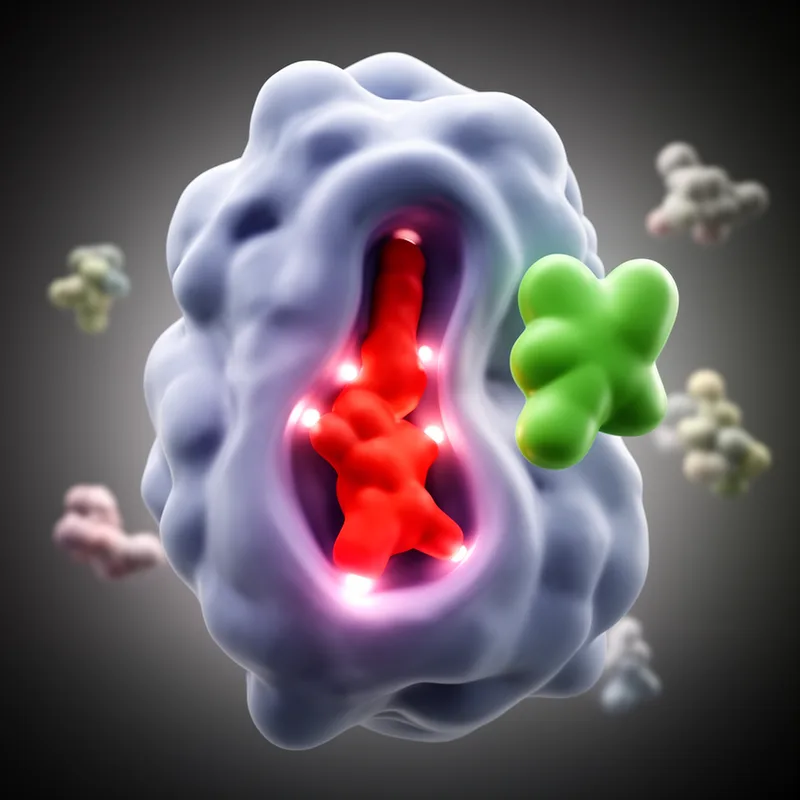
noncognate
- adjective
- /nɒnˈkɒɡneɪt/
- Specialized
- The enzyme was able to bind a noncognate substrate, indicating a lack of strict specificity.
Examples
-
A noncognate ligand can sometimes trigger unexpected biological responses in a cell.
-
Researchers observed that the protein interacted with several noncognate molecules in the experiment.
-
A noncognate molecule was used in the experiment.
-
The researchers identified a noncognate interaction in their study.
-
The enzyme was able to bind a noncognate substrate, indicating a lack of strict specificity.
-
Researchers observed that the protein interacted with several noncognate molecules in the experiment.
-
A noncognate ligand can sometimes trigger unexpected biological responses in a cell.
How Specific


Surface Forms
Morphology
Etymology
The word noncognate is built from the beginning non- meaning 'not' and cognate meaning 'related' or 'matching'. So, in biology and chemistry, a noncognate molecule is one that is not the usual or matching partner for a protein or enzyme.