
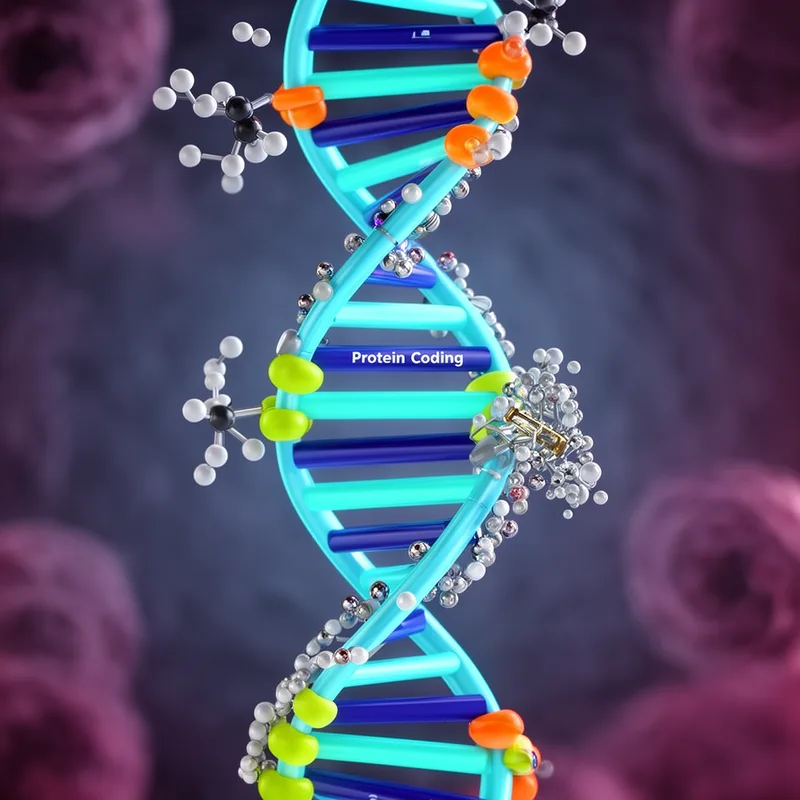
noncoding DNA
- noun
- /nɒnˈkoʊdɪŋ diːˈɛnˈeɪ/
- Specialized
- Most of the human genome consists of noncoding DNA that does not produce proteins.
Examples
-
Although once considered 'junk', noncoding DNA has been found to play important roles in gene regulation.
-
Scientists are still studying the functions of noncoding DNA in different organisms.
-
Researchers study noncoding DNA to understand its role in gene regulation.
-
Many scientists believe that noncoding DNAs have critical functions.
-
Although once considered 'junk', noncoding DNA has been found to play important roles in gene regulation.
-
Most of the human genome consists of noncoding DNA that does not produce proteins.
-
Researchers study noncoding DNA to understand its regulatory functions within the genome.
Synonyms


 1
6.6
1
6.6
A DNA or RNA sequence that does not code for a protein
Antonyms
How Coding

Surface Forms
Morphology
The noun phrase is directly compositional: 'noncoding' means 'not coding' and 'DNA' is the hereditary molecule, so the phrase denotes DNA that does not code for proteins. This negation + noun pattern is a straightforward morphological composition common across languages, so a B1 learner who knows the constituent words can infer the basic meaning (though detailed biological functions would need extra domain knowledge).
Etymology
Noncoding DNA comes from thinking of DNA as a recipe or a set of 'instructions': parts called coding 'code' to make proteins, and parts called noncoding do not make proteins. Many pieces of noncoding DNA were once called 'junk', but we now know they often help control when genes turn on or off, so the name shows they do not directly 'code' for proteins.