
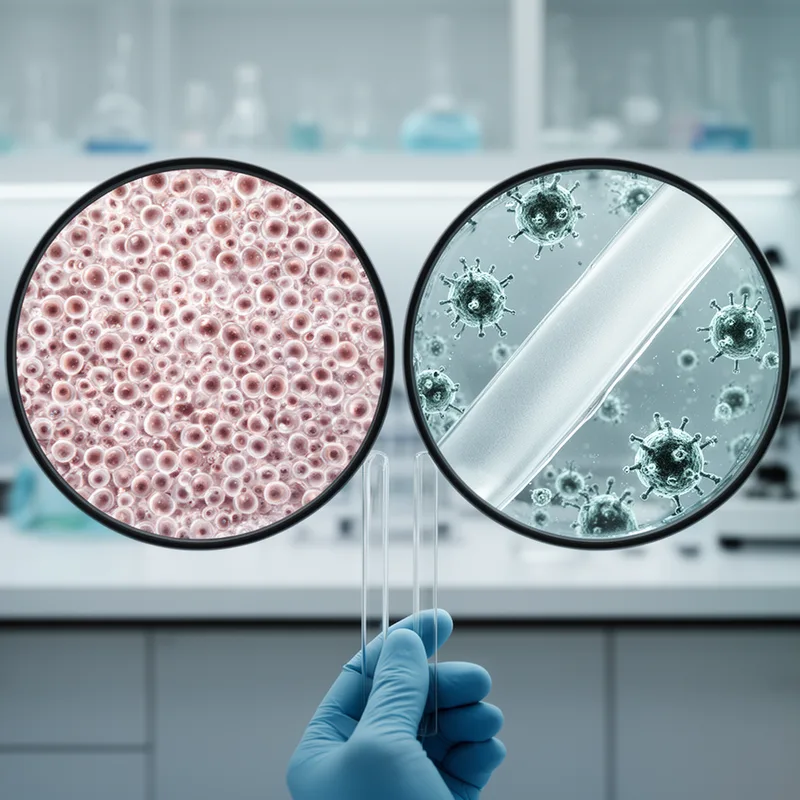
noncellular
- adjective
- /nɒnˈsɛljʊlər/
- Specialized
- Some ancient organisms were noncellular, existing before the evolution of true cells.
Examples
-
Many types of synthetic materials are completely noncellular in nature.
-
Many noncellular organisms exist in extreme environments.
-
Viruses are considered noncellular organisms because they lack cellular structure.
-
The virus is noncellular and cannot reproduce on its own.
-
Scientists studied a noncellular organism that thrives in extreme environments.
-
The researchers focused on noncellular structures found in the samples collected from the ocean.
-
This virus is considered noncellular because it does not have a cellular structure.
Synonyms
 1
9.5
1
9.5

A thing that has no cells or cell structure


 1
5.1
1
5.1
Not having any tiny living parts from plants or animals
Antonyms

How Cellular

Surface Forms
Morphology
Etymology
The word noncellular breaks into non- 'not' and cell 'a tiny living unit'. So, noncellular describes something that is not made of cells.