

nonbiological


 1
5.1
1
5.1
- adjective
- /ˌnɒnˈbaɪəˌlɒdʒɪkəl/
- Specialized
- Researchers often explore the functions of nonbiological systems to understand complex processes in nature.
Examples
-
In the United States, for example, adoptions of U.S.-born children satisfy between one-half and two-thirds of the total demand for nonbiological children.
Academic text (2003) -
In nonbiological physical systems, self-organized patterns are epiphenomena that have no adaptive significance.
Academic text (2003) -
Relative hazards of biological agents, chemicals, and nonbiological material as related to feedstocks. PREFORMATTED TABLE Table 2.
Academic text (1996) -
The factors in the environment that exert selection—both the biological ones, such as an individual's competitors, predators, and parasites, and the nonbiological ones, such as the weather—are called agents of selection.
Academic text (2007) -
Machines that operate using nonbiological methods can perform tasks that are typically done by living organisms.
-
Nonbiological materials, such as metals and plastics, play a critical role in many technological advancements.
Synonyms
 15
5.6
15
5.6
A noun that means a thing not alive, like a rock or chair
 1
6.7
1
6.7
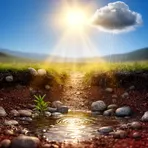
Not living parts of an environment, like sunlight and temperature

Not made by or connected to living things
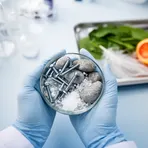
Not made from plants or animals

Not alive, for example stones, water, and machines
Antonyms

How Biological

Surface Forms
Morphology
nonbiological = biological (transparent) = non + biology + ical
The adjective 'biological' is straightforwardly negated by the productive prefix 'non-', producing the expected meaning 'not biological'.
Etymology
Nonbiological breaks into non- meaning 'not' and bio meaning 'life', the same root as biology. So nonbiological describes things that are 'not alive' or not part of life processes, such as plastic or other man-made materials.