
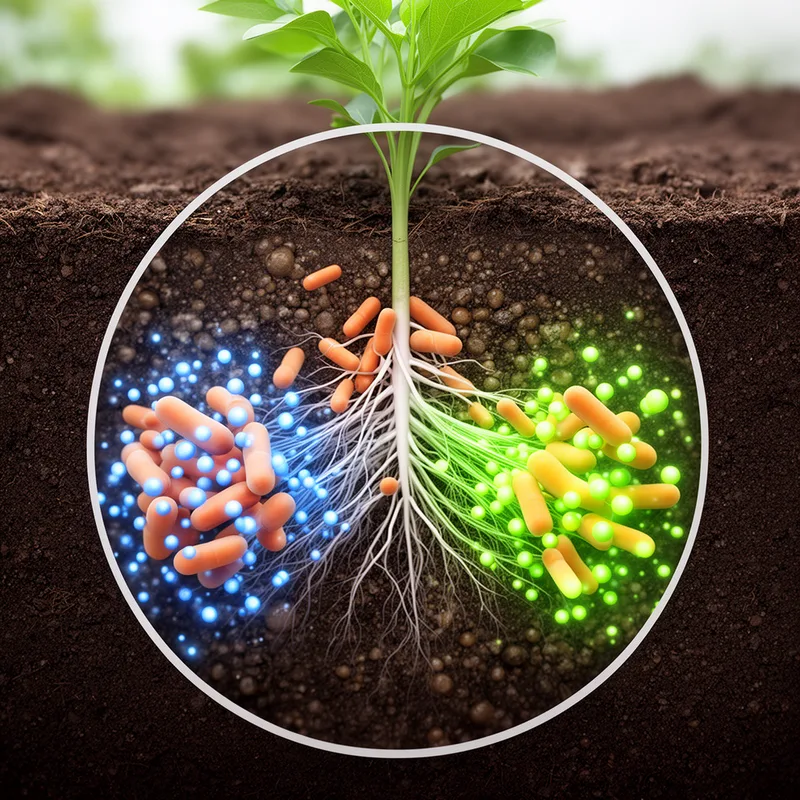
nitrobacteria
- noun
- /ˌnaɪtroʊbækˈtɪəriə/
- Specialized
- Nitrobacteria convert nitrites into nitrates, which are essential for plant growth in the soil.
Examples
-
The presence of nitrobacteria accelerates the conversion of nitrites to nitrates in agricultural fields.
-
Nitrobacteria play a key role in making soil nutrients available to plants.
-
Without nitrobacteria, the nitrogen cycle in the ecosystem would be incomplete.
-
The nitrobacteria in the soil help plants grow.
-
Many farmers rely on nitrobacteria for healthy crops.
-
The role of nitrobacteria is crucial in improving soil fertility by transforming harmful nitrites.
-
Farmers depend on nitrobacteria to enhance the nutrient content of their soil for better crop yields.
Synonyms

Bacteria in soil that change nitrites into nitrates and help plants grow

A small soil bacterium that turns nitrite into nitrate to help plants in the nitrogen cycle

A bacterium that turns nitrite into nitrate in soil

A bacterium that turns nitrite into nitrate to help plants get nitrogen
A soil bacterium that changes ammonia into forms plants can use
Surface Forms
Morphology
Etymology
Nitrobacteria comes from nitro- ('nitrogen') and bacteria ('tiny living things'). These are soil bacteria that work with nitrogen, changing nitrite into nitrate to make nutrients available for plants.

