
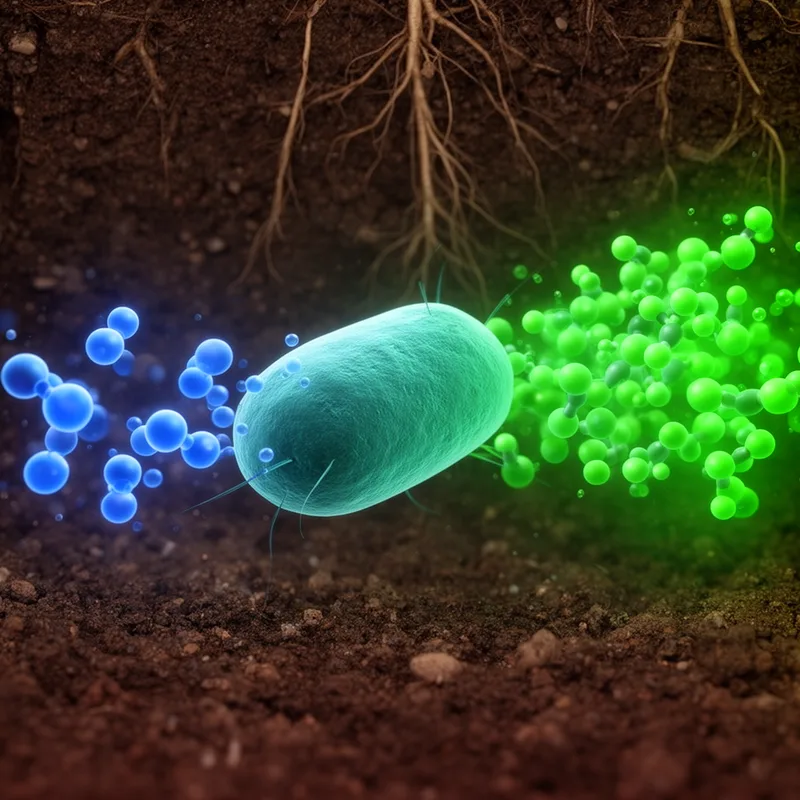
nitrate bacterium
- noun
- /ˈnaɪˌtreɪt ˈbæktɪriəm/
- Specialized
- The nitrate bacterium converts nitrites into nitrates.
Examples
-
Without nitrate bacterium, nitrites would accumulate and disrupt plant growth.
-
The soil's health depends in part on the presence of nitrate bacterium in its ecosystem.
-
Scientists isolated a new strain of nitrate bacterium from agricultural land.
-
Many nitrate bacteria thrive in anaerobic environments.
-
The presence of nitrate bacterium in the soil is essential for converting harmful nitrites into beneficial nitrates.
-
Agricultural practices often aim to enhance the growth of nitrate bacterium to improve crop yield through better nitrogen cycling.
-
In healthy ecosystems, nitrate bacterium help maintain nutrient balance by oxidizing nitrites in the soil.
Synonyms

A small soil bacterium that turns nitrite into nitrate to help plants in the nitrogen cycle

A bacterium that turns nitrite into nitrate to help plants get nitrogen
A soil bacterium that changes ammonia into forms plants can use
Surface Forms
Morphology
The noun–noun composition 'nitrate bacterium' is directly interpretable as a bacterium associated with nitrates: combining 'nitrate' (the chemical) with 'bacterium' yields a microorganism related to that substance. While a B1 learner might not infer the precise biochemical role (oxidizing nitrites to nitrates), the overall concept of a bacterium linked to nitrates is transparently derivable from the constituents and follows common cross-linguistic compounding patterns.
Etymology
Nitrate bacterium names a small bacterium that turns nitrite into nitrate. Imagine tiny workers changing one chemical into another, so the name simply means 'a bacterium that makes nitrates'.

