
nibong


 1
9.9
- noun
- Philippine
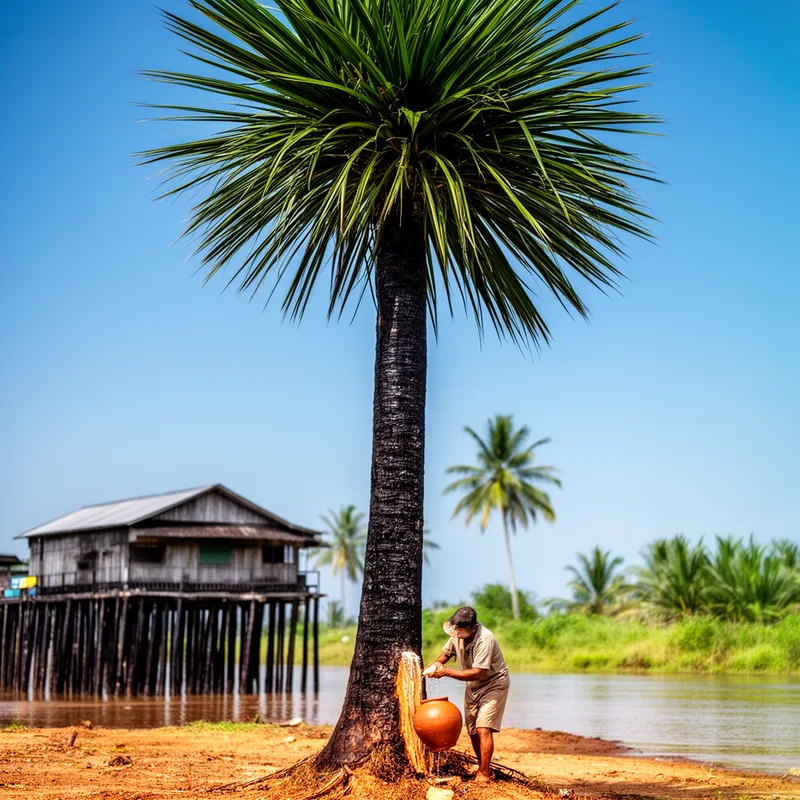
- The sap from the nibong is sometimes collected and used in traditional recipes.
Examples
-
The villagers built their houses using strong nibong poles.
-
Many craftsmen prefer using nibong wood for furniture.
-
A nibong tree can be found growing near the riverbank in many rural areas.
-
The nibong tree grows tall in tropical climates.
-
The builders chose nibong wood for its strength and durability in constructing the house.
-
Craftsmen often use nibong for making sturdy furniture due to its high quality.
-
In Southeast Asia, nibong sap is harvested to produce a sweet syrup favored in local dishes.
Synonyms
 1
9.9
A tropical palm that grows in coastal mudflats by the sea
 1
9.9
A palm tree that grows in mangrove forests near the sea in Southeast Asia
 1
6.0
A large tropical palm tree whose sweet sap makes sugar and wine and whose trunk gives sago
 1
9.9
A large palm tree from Southeast Asia used for strong fibers, sweet sap, and sago
 1
9.9
A Malaysian palm tree whose soft trunk produces sago used as a food starch and to make cloth
 1
9.9
A swamp palm that gives sweet sap, leaves for roofs, and edible seeds
 1
9.9
A low palm that grows in muddy coastal water and gives sap, leaves, and edible seeds
 1
9.9
A tall palm tree whose wide leaves people use to make roofs and weave baskets

A tall tree with fan-shaped leaves used for roofing and weaving, hard wood, and sweet sap used to make wine

A tall palm whose sweet sap makes jaggery and whose soft inner trunk gives sago

A tall palm that gives sago from its trunk and sweet sap used to make sugar
Surface Forms
Etymology
Nibong comes from the Malay word 'nibong', the local name for a kind of palm tree that grows in Southeast Asia. That's why nibong today means that tropical palm known for its strong wood and useful sap.