

nervus femoralis
- noun
- /ˈnɜrvəs ˌfɛmɔˈrælɪs/
- Specialized
- Surgeons must carefully identify the nervus femoralis during hip replacement procedures.
Examples
-
The nervus femoralis is vital for sensation in the anterior thigh region.
-
The nervus femoralis controls the movement of the quadriceps muscle.
-
Injury to the nervus femoralis can lead to difficulty in extending the knee.
-
Injuries to the nervus femoralis can lead to weakness in the thigh.
-
The nervus femoralis is responsible for innervating the quadriceps muscle in the thigh.
-
A dysfunction of the nervus femoralis can lead to weakness in the leg and difficulty in walking.
-
Surgeons must avoid damaging the nervus femoralis during hip replacement procedures to prevent complications.
Synonyms
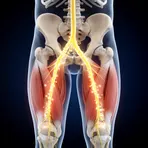
A large bundle that carries messages from the lower spine to the front of the thigh
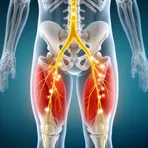
A large nerve that comes from the lower back and sends signals to the front thigh muscles and skin
Surface Forms
Morphology
nervus + femoralis
The phrase is a straightforward Latin noun + adjective naming pattern: 'nervus' corresponds to 'nerve' and 'femoralis' corresponds to 'femoral' (relating to the femur/thigh), so the meaning 'femoral nerve' is directly compositional. Anatomical terms follow this transparent Latinate pattern across many languages, so a learner who knows the constituent meanings can infer the MWE meaning.
Etymology
Nervus femoralis comes from Latin: nervus means 'nerve' and femoralis means 'of the thigh', from the word 'femur' meaning 'thigh bone'. So the name points to the nerve that runs to the front of the thigh, which is why it refers to the femoral nerve today.

