
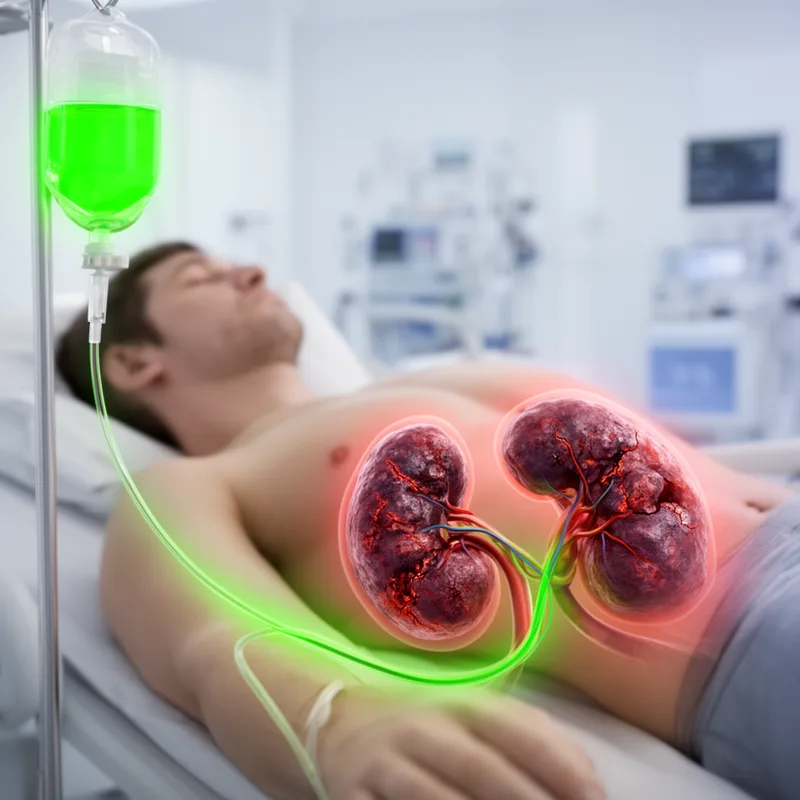
nephrotoxicity


 1
9.9
- noun
- /ˌnɛfroʊtɒkˈsɪsɪti/
- Specialized
- Due to the potential for nephrotoxicity, doctors recommended regular blood tests to track kidney health during treatment.
Examples
-
Blood pressure should also be monitored because the likelihood of nephrotoxicity is increased when there is hypertension.
Academic text (1991) -
Monitoring of circulating drug levels may limit renal impairment in patients on cyclosporin or aminoglycosides, although as many as 33% of cases of aminoglycoside nephrotoxicity occur in patients with "therapeutic" levels.
Academic text (1995) -
Unfortunately, associated oto- and nephrotoxicity limit the use of this class of drugs.
Academic text (2008) -
Avoidance of nephrotoxicity and further insult
Academic text (2016) -
Further adverse reactions were later described, namely nephrotoxicity and neuromuscular blockade.
Academic text (1998) -
The standard medical therapy for RCM is amphotericin B in a dose of 1.0 to 1.5 mg/kg/day for a period of several weeks to several months, depending on the clinical response and the degree of the drug's side effects, especially nephrotoxicity.
Academic text (2004) -
Potential for adverse effects includes hypersensitivity reaction, hypokalemia, GI disturbance, anemia, nephrotoxicity, and tachycardia.
Academic text (2005) -
The doctors warned that the medication might cause nephrotoxicity, so they monitored his kidney function closely.
-
In some cases, patients experienced nephrotoxicity after using certain antibiotics, highlighting the need for careful dosage.
How Harmful
- Specialized
12
3.9

- Specialized
1
9.9
Surface Forms
Morphology
nephrotoxicity = nephrotoxic (semi-transparent) = nephro + toxic + ity
Formed from the medical combining form 'nephro-' (kidney) + 'toxic' + '-ity'; 'toxic' and '-ity' are transparent but the 'nephro-' element is specialized and may be unknown to average learners.
Etymology
The word nephrotoxicity joins nephro- ('kidney') and toxicity ('poison' or 'harm'), and you can see the same idea in the familiar word toxic. So, nephrotoxicity means 'poisoning' or 'harm' to the kidneys.