

neovascularization
- noun
- /ˌniːoʊˌvæskjʊləraɪˈzeɪʃən/
- Specialized
- The first week of healing is critical because it is then that extravasation of blood and serum from the wound and neovascularization occur.
- neovascularization process
Examples
-
This neovascularization process contributes to tendon healing; however, it may weaken the tendon as it can interfere with the collagen matrix.
Academic text (2016) -
There is also a decrease in the removal of necrotic tissue and ultimately a delay in neovascularization.
Academic text (2003) -
Significant, continuous pain, night pain, and difficulty sleeping can be related to the neovascularization process.
Academic text (2016) -
The process of neovascularization plays a crucial role in wound healing by supplying necessary nutrients to the injured tissue.
-
Researchers are studying neovascularization to understand how new blood vessels form during the body's healing process.
-
In patients with diabetes, impaired neovascularization can lead to delayed healing of wounds and increases the risk of complications.
Synonyms
 3
8.4
3
8.4

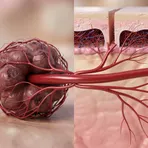
The growth of new blood vessels during healing or in tumors
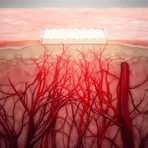
Growth of new blood vessels in body tissue
How Severe
- Specialized

- Specialized
Surface Forms
Morphology
neovascularization = vascularization (semi-transparent) = neo + vascular + ization
The word is built regularly from 'neo-' + 'vascularization', but the technical biological sense is specialized rather than fully obvious.
Etymology
Neovascularization comes from neo- 'new' and vascular from a root meaning 'vessel', like the English word vessel. So it literally means 'making new vessels' and is used for the normal growth of new blood vessels that helps healing after injury or surgery.