

neocolonialism


 1
9.9
1
9.9
- noun
- /ˌniːoʊˈkɒləˌnɪzəm/
- However, by the 1990s, excitement over post-Cold War globalization had given way to new kinds of catastrophism, economic neocolonialism, erosion of traditional cultures and values, and emerging threats to public health.
- neocolonialism in Nigeria
- neocolonialism as trauma
- colonialism and neocolonialism
Examples
-
In Inventory, the speaker bears witness as she catalogues the wars, killings, environmental devastation, political instabilities, and neocolonialism that have shaped her contemporary moment.
Academic text (2014) -
What is the European and U.S. presence in Yugoslavia, for example, if not a kind of neocolonialism?
Academic text (2004) -
By the 1970s, the Third World movement additionally involved a struggle against neocolonialism.
Academic text (2018) -
We see that neocolonialism in Nigeria functions on many levels: cultural, illegal, and corporate.
Academic text (2008) -
Interesting article about propaganda and the proliferation of neocolonialism in the East.
Blog text (30) -
This Africa being born in Angola was an Africa without neocolonialism, the Africa of a complete and authentic liberation.
-
To do otherwise would have invited condemnation of neocolonialism from Third World governments that could have been exploited politically by the Soviet Union.
Academic text (1992) -
It's about liberating the muted voices of those held down by class structures and neocolonialism, by poverty, sexism, racism, and homophobia.
Academic text (2001) -
Economic partnership with Africa should be complemented with political-security arrangements that can keep the peace without fostering perceptions of neocolonialism and economic underdevelopment.
Academic text (2002) -
Many scholars argue that neocolonialism continues to affect the economic policies of developing nations.
Synonyms
 28
8.0
28
8.0
A policy in which a country takes control of other countries, often by taking land or using force
 3
7.5
3
7.5
A policy by a country to gain more land or power
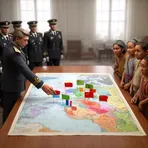
A process when a country takes control of other lands and people
How Controlling

Surface Forms
Morphology
neocolonialism = colonialism (transparent) = neo + colonial + ism
The formation is a straightforward prefixation: 'neo-' meaning 'new' attached to 'colonialism', yielding a modern form of colonialism, which is clear to learners familiar with both parts.
Etymology
The word neocolonialism comes from neo- meaning 'new' and colonialism, which is control over a place or people like a colony. Think of it as 'new' colonial control: instead of taking land with soldiers, powerful countries use money, trade, or culture to influence weaker ones, which is why the word means that kind of control.