

necrosis
 11
8.2
11
8.2

- noun
- /nɪˈkroʊsɪs/
- Specialized
- The patient developed necrosis of the tissue due to a severe infection that went untreated for too long.
- nipple necrosis
- flap necrosis
- tumor necrosis
Loading YouTube…
Watch on YouTubeNow to see is there any more necrosis or is it stopped?
- Now to see is there any more necrosis or is it stopped?
- Any tissue death caused by a blockage of an artery from a thrombus, we call infarction, and any dead tissue we call necrosis.
Examples
-
Extreme ischaemia can induce bilateral renal cortical necrosis and irreversible renal failure.
Academic text (1995) -
In cases of frostbite, necrosis can occur, leading to the death of skin cells in the affected regions.
-
Now to see is there any more necrosis or is it stopped?
-
Percentage of necrosis area in both groups. Data presented as % unless otherwise indicated.
Academic text (2015) -
By the time surface damage is noticed, subcutaneous necrosis may already have occurred.
Academic text (1994) -
Seven of the nine cases of nipple necrosis occurred in breasts larger than 500 g.
Academic text (2011) -
However, as verified in the present study, 2.79 J per point caused more necrosis in the skin flap.
Academic text (2015) -
Examination in the operating room revealed extensive necrosis of his septum, lateral nose, and face.
Academic text (1995) -
While moderate congestion of the kidneys and mild necrosis in the liver tissue were seen in all treatment groups.
Academic text (2015) -
The patient is suffering from a superior mesenteric insufficiency, resulting in a loss of blood to the lower colon, necrosis, and a steatorrheic stool.
Synonyms
 16
8.7
16
8.7
Dead tissue caused by infection or loss of blood
 14
8.9
14
8.9
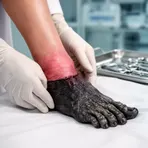
Death of part of the body when its blood supply is blocked, often by a clot
 1
9.9
1
9.9
Death of body tissue in one place often caused by infection

Dead body tissue caused by disease or injury that often turns black
Compounds


A fast, often deadly infection caused by bacteria that kills body tissue and makes gas in the wound
- Specialized
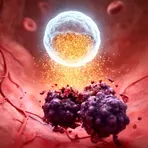
Some white blood cells make a protein that causes inflammation and can kill cancer cells
How Damaged

Surface Forms
Morphology
necrosis = necro + sis
The element 'necro-' is a Greek medical combining form (not a standalone English word) and '-sis' is a technical noun-forming suffix, so an average B1 learner cannot reliably derive 'death of tissue' from familiar English components.
Etymology
Necrosis comes from the Greek root necro- meaning 'dead' and the ending -osis meaning 'a condition' or 'a process'. So, necrosis is a 'condition of death' in cells or tissue, which is why it names the death of body tissue after injury, infection, or loss of blood flow.