

tumor necrosis factor
- noun
- /ˈtumər nɪˈkroʊsɪs ˈfæktər/
- Specialized
- In rheumatoid arthritis, treatments that block tumor necrosis factor can help reduce inflammation and pain.
- tumor necrosis factor inhibitors
- tumor necrosis factor alpha
Examples
-
However, tuberculosis, serious infections, and possibly herpes zoster are increased with treatment with tumor necrosis factor-alpha inhibitors, stressing the need for careful patient screening and monitoring.
Academic text (2014) -
Keywords: Antirheumatic agents; Arthritis, rheumatoid; Tumor necrosis factor-alpha
Academic text (2015) -
Lymphotoxin and tumor necrosis factor (TNF) CSF-1
Academic text (2003) -
These target tumor necrosis factor, the pro-inflammatory cytokines responsible for the establishment and maintenance of inflammation in many rheumatological conditions.
Academic text (2014) -
In patients with rheumatoid arthritis (RA), are some tumor-necrosis factor (TNF) inhibitors safer than others?
Academic text (2015) -
The comparative safety of tumor necrosis factor inhibitors in rheumatoid arthritis: a meta-analysis update of 44 trials.
Academic text (2015) -
In patients treated for rheumatoid arthritis, some tumor-necrosis factor inhibitors increase serious adverse events, serious infections, and treatment discontinuation due to adverse events, but not cancer, compared with control. Source of funding: National Institutes of Health.
Academic text (2015) -
However, adding a biologic tumor necrosis factor (TNF) inhibitor is mandated in patients who don't achieve target within 6 months, especially those with unfavorable factors.
Academic text (2015) -
The beneficial effect of pentoxifylline is probably related to its capacity to inhibit the production of tumor necrosis factor, but other mechanisms, such as inhibition of vascular endothelial growth factor and tissue factor, may also have a role.
Academic text (2003) -
Tumor necrosis factor plays a crucial role in promoting inflammation during autoimmune diseases like rheumatoid arthritis.
Synonyms
 4
7.9
4
7.9

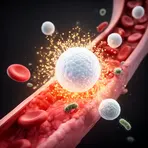
A protein made by white blood cells that causes inflammation and helps the immune system
Antonyms

Surface Forms
Morphology
The phrase is compositionally built: 'tumor' + 'necrosis' denotes death of tumor cells and 'factor' denotes an element that influences an outcome. Therefore a learner who knows the constituents can infer it is an agent/element related to tumor cell death (even if the term is technical), so the meaning is directly derivable from the parts.
Etymology
The name tumor necrosis factor comes from early lab work when scientists found a protein that made a tumor, a mass of sick cells, die, so they used necrosis to mean 'cell death' and factor to mean a thing that causes it. So today tumor necrosis factor names a protein made by white blood cells that can 'kill tumor cells' but can also 'cause harmful inflammation'.