
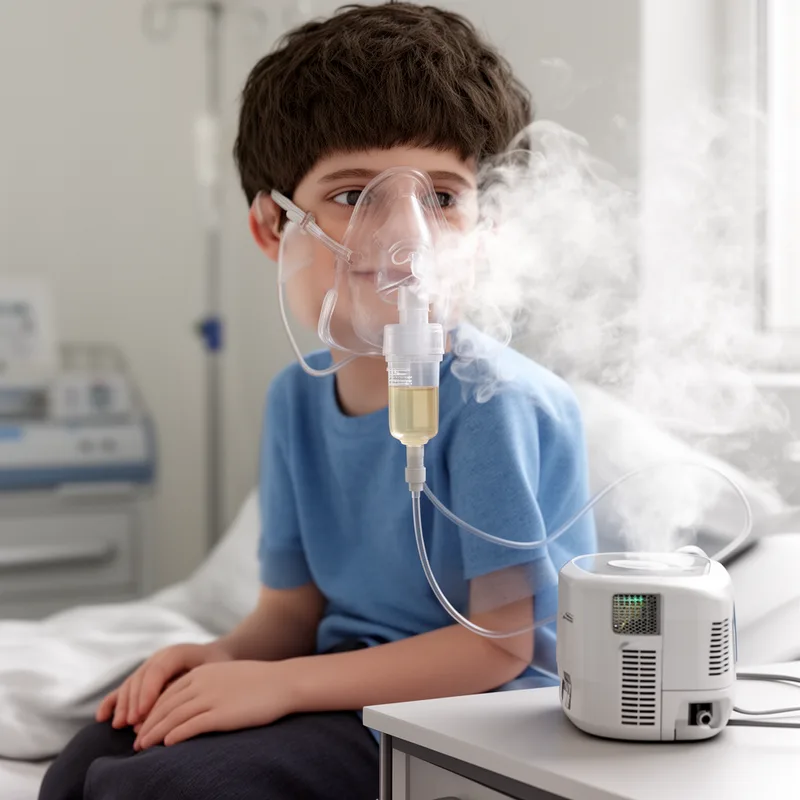
nebulization
- noun
- /ˌnɛbjuˈlaɪzeɪʃən/
- Specialized
- Nebulization is often used in hospitals to deliver medicine directly to the lungs.
Examples
-
Affected ferrets received broad-spectrum antimicrobial drugs, bronchodilators, expectorants, nonsteroidal anti-inflammatory drugs, and nebulization; all clinical signs except the dry cough temporarily decreased.
Academic text (2012) -
Four percent lidocaine oral gargle and nebulization were used to anesthetize the oral cavity and supraglottic area.
Academic text (2007) -
The cost of nebulization therapy seems to be a determining factor.
Academic text (2007) -
Four percent lidocaine oral gargle and nebulization
Academic text (2007) -
During nebulization of the technetium, subjects were asked to voluntarily occlude the untreated nostril and swallow.
Academic text (1999) -
If our trial had included subjects who did have nasal pathology, we would have used a larger dose of nasal decongestant with the goal of reducing any swelling of the nasal mucosa prior to the nebulization of technetium.
Academic text (1999) -
The doctor recommended nebulization to help him breathe better during the asthma attack.
-
After receiving nebulization therapy, she felt immediate relief from her cough.
Synonyms


 1
8.2
1
8.2
To turn a liquid or solid into tiny particles that float in the air
 1
7.6
1
7.6
To break a liquid into very small droplets for spraying
How Misty
- Specialized
1
7.6

- Specialized
- Specialized
3
3.7
19
2.1
- Specialized
1
5.6
Surface Forms
Morphology
Etymology
Nebulization comes from the Latin word nebula, meaning 'mist' or 'cloud'. So nebulization is the act of turning a liquid into a fine 'mist', which explains why the word is used for medicine you breathe in.