
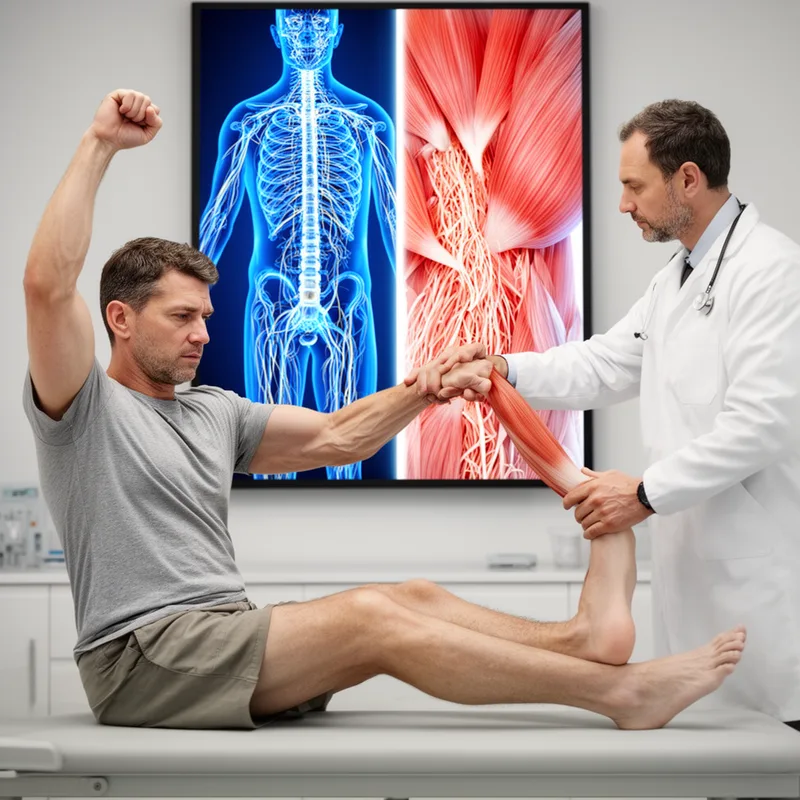
myopathy
 1
9.0
1
9.0

- noun
- /maɪˈɒpəθi/
- Specialized
- Fibrates are associated with myopathy, so the risk is increased when these are added to statin therapy.
- risk of myopathy
- increased risk of myopathy
- associated with myopathy
Examples
-
Many athletes suffer from myopathy, which leads to significant muscle weakness.
-
However, statins also increase the risk for myopathy—the most severe manifestation of which is rhabdomyolysis, characterized by acute kidney injury (AKI).
Academic text (2014) -
The vet said that she died of "exertional myopathy".
-
Ezetimibe is associated with myopathy, so the risk is increased when it is added to statin therapy.
Academic text (2011) -
This was thought to be consistent with a necrotizing myopathy likely to be inflammatory in nature.
Academic text (2007) -
We examined the relevance of histological findings of this myopathy to the clinical presentation in pediatric patients.
Blog text (13) -
Mutations in genes involved in LD turnover have been linked to lipid storage disease and myopathy in humans.
Blog text (27) -
Polymyositis is an inflammatory myopathy in which the pathogenesis is presumed to be autoimmune.
Academic text (2007) -
The following patient groups are at increased risk of myopathy: * age > 65 years * renal impairment * hypothyroidism * high alcohol intake * history of muscle disorders * those taking certain drugs concurrently.
Academic text (2011) -
The doctor explained that myopathy is a muscle disease not caused by nerve issues.
Synonyms
 11
9.3
11
9.3
A disease passed from parents that makes muscles get weak and waste away
 8
5.3
8
5.3
Inherited diseases that gradually make the muscles used for movement weak and smaller


 1
7.0
1
7.0
An inherited disease causing slow muscle weakness, loss, and trouble relaxing muscles, often in the face and hands
 1
9.9
1
9.9
A condition that makes many muscles in the arms, legs, and neck weak and painful, often with swelling
 1
9.9
1
9.9
Swelling and pain in a muscle that make the muscle weak
A genetic disease causing slow muscle weakness and trouble relaxing muscles, often in face and hands

A rare inherited muscle condition that causes slow loss of strength and muscle stiffness

A muscle disease that slowly makes arm and thigh muscles weak in older adults

Muscles stay tight and relax slowly after use

A rare inherited condition that makes muscles slow to relax after you move them

A condition causing muscles in the hands or feet to become stiff and sometimes twitch
Compounds
- Specialized
A rare muscle disease in cancer patients causing hip and thigh weakness and aching back from immune attack on nerves
Surface Forms
Morphology
myopathy = myo- + -pathy (opaque) = myo + pathy
Formed from Greek combining forms 'myo-' (muscle) + '-pathy' (disease), which are specialized medical morphemes and not standalone English words, so the relation is not obvious to average learners.
Etymology
Myopathy comes from the parts myo- meaning 'muscle' and -pathy meaning 'disease', and you can see the same -pathy in sympathy (which is about 'feeling'); so myopathy simply means a 'muscle disease', a problem of the muscles rather than the nerves.