
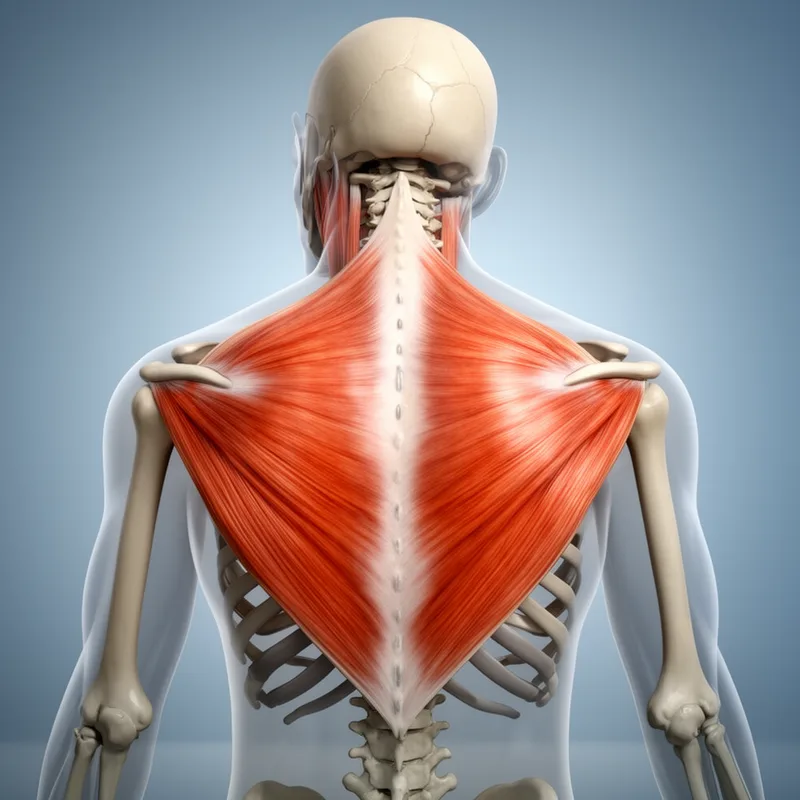
musculus trapezius
- noun
- /ˈmʌskjələs træˈpiːziəs/
- Specialized
- The musculus trapezius plays a vital role in shoulder elevation and neck movement.
Examples
-
Injuries to the musculus trapezius can cause pain and limit arm mobility.
-
During anatomy class, students studied the structure and function of the musculus trapezius in detail.
-
The musculus trapezius helps in lifting the shoulders.
-
Many athletes train their musculi trapezii for better performance.
-
Injuries to the musculus trapezius can cause pain and limit arm mobility.
-
The musculus trapezius plays a vital role in shoulder elevation and neck movement.
-
During anatomy class, students studied the structure and function of the musculus trapezius in detail.
Synonyms

 2
8.4
2
8.4

A large triangular muscle on each side of the upper back and neck that moves shoulders and supports arms


 1
5.2
1
5.2
A large flat muscle on the upper back and neck that moves the shoulders and arms

A flat triangular part at the top of the back that moves and supports the shoulder and arm
Surface Forms
Morphology
The term is a straightforward compositional anatomical name: 'musculus' = muscle and 'trapezius' = the triangular shoulder muscle, so the overall meaning ('trapezius muscle') is directly derivable from its parts. Although technical and Latin-derived, such anatomical naming conventions are regular and internationally recognizable, so a learner who knows both constituents would understand it.
Etymology
Musculus trapezius comes from old Latin and Greek words that create a clear picture: musculus means 'little mouse' because a moving muscle looked like a mouse under the skin, and trapezius describes its four-sided shape on the upper back and shoulder. So the name tells you it is a 'small, four-sided muscle' that helps move the shoulders and neck.