
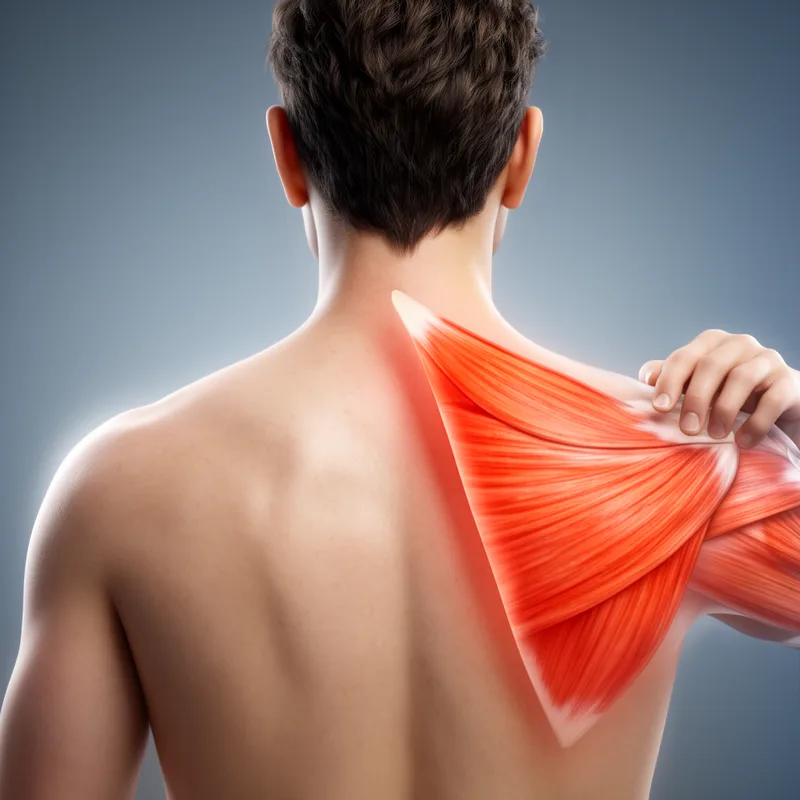
cowl muscle
- noun
- Specialized
 :
músculo trapecio
:
músculo trapecio
- The cowl muscle helps to stabilize your shoulder during arm movements.
Examples
-
Physical therapy may strengthen the cowl muscle after a shoulder injury.
-
Injury to the cowl muscle can limit mobility and cause pain in the upper back.
-
The cowl muscle helps stabilize the shoulder joint.
-
Many athletes train their cowl muscles for better performance.
-
Injury to the cowl muscle can limit mobility and cause pain in the upper back.
-
Physical therapy may strengthen the cowl muscle after a shoulder injury.
-
The cowl muscle helps to stabilize your shoulder during arm movements.
Synonyms

 2
8.4
2
8.4

A large triangular muscle on each side of the upper back and neck that moves shoulders and supports arms


 1
5.2
1
5.2
A large flat muscle on the upper back and neck that moves the shoulders and arms

A large flat muscle on the upper back and shoulder that helps move the shoulder and neck
Surface Forms
Morphology
cowl + muscle
If a learner knows 'cowl' as a hood or covering and 'muscle', they can infer this refers to a muscle that forms or covers a hood‑like area on the shoulder/upper back, so there is a clear compositional cue. However, the exact anatomical identity and specific function (the flat triangular muscle that moves/stabilizes the shoulder and arms) are technical and not fully predictable from the parts alone, so full understanding requires domain knowledge.
Etymology
The name cowl muscle comes from the word cowl, meaning a monk's 'hood', because the wide muscle lies like a hood over the back of the shoulders. So, the name now refers to those flat, triangle-shaped muscles that help move and support the shoulders and upper back.