
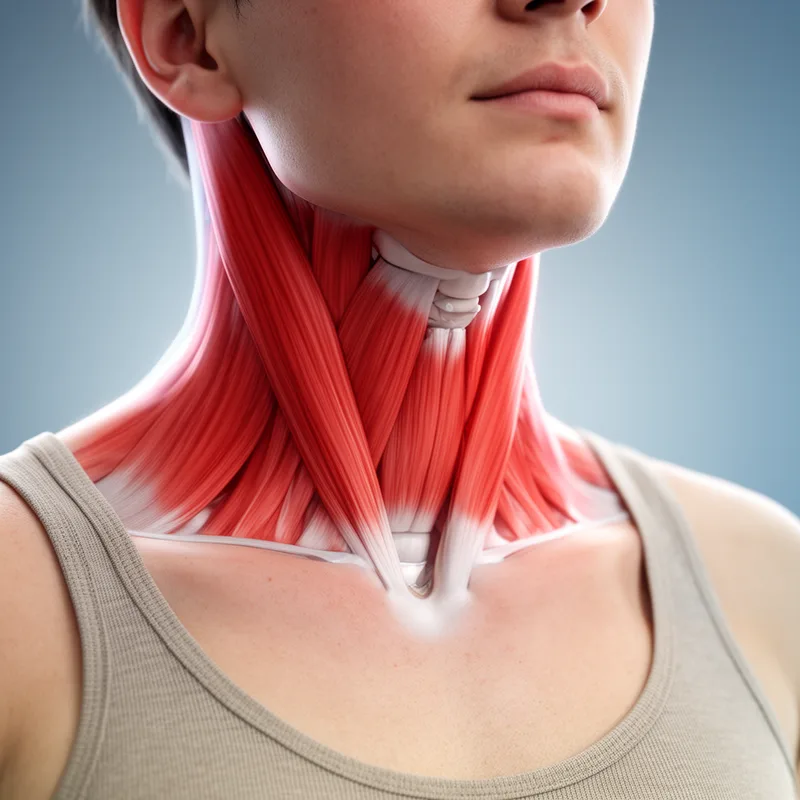
musculus sternocleidomastoideus
- noun
- /ˈmʌskjələs ˌstɜrnəˌklaɪdəˈmoʊstəˌdaɪəs/
- Specialized
- The musculus sternocleidomastoideus is essential for turning and nodding your head.
Examples
-
When the musculus sternocleidomastoideus contracts, the head turns.
-
Injury to the musculus sternocleidomastoideus can cause neck pain and limited movement.
-
Surgeons must take care not to damage the musculus sternocleidomastoideus during certain procedures.
-
The musculus sternocleidomastoideus is essential for head movement.
-
Injury to the musculus sternocleidomastoideus can cause neck pain and limited movement.
-
Surgeons must take care not to damage the musculus sternocleidomastoideus during certain procedures.
-
The musculus sternocleidomastoideus is essential for turning and nodding your head.
Synonyms
 1
9.9
1
9.9

A thick neck muscle on each side that turns and bends the head


 1
7.2
1
7.2
A thick muscle on each side of the neck that helps you turn and bend your head
Surface Forms
Morphology
musculus + sternocleidomastoideus
This is a technical Latin anatomical name rather than a phrase built from familiar English words; one constituent is not even defined in the input. Even if a learner knew 'musculus' = muscle, the complex Latin compound 'sternocleidomastoideus' is not transparently interpretable by a B1 learner, so the overall meaning cannot be derived from the listed constituents.
Etymology
Musculus sternocleidomastoideus is a Latin name that describes the bones it links: sternum (chest bone), clavicle (collarbone), and mastoid (the bone just behind the ear). Because the muscle runs from the sternum and clavicle up to the mastoid, it pulls the head to the side and helps nod, so the name tells its job: 'to turn the head'.