
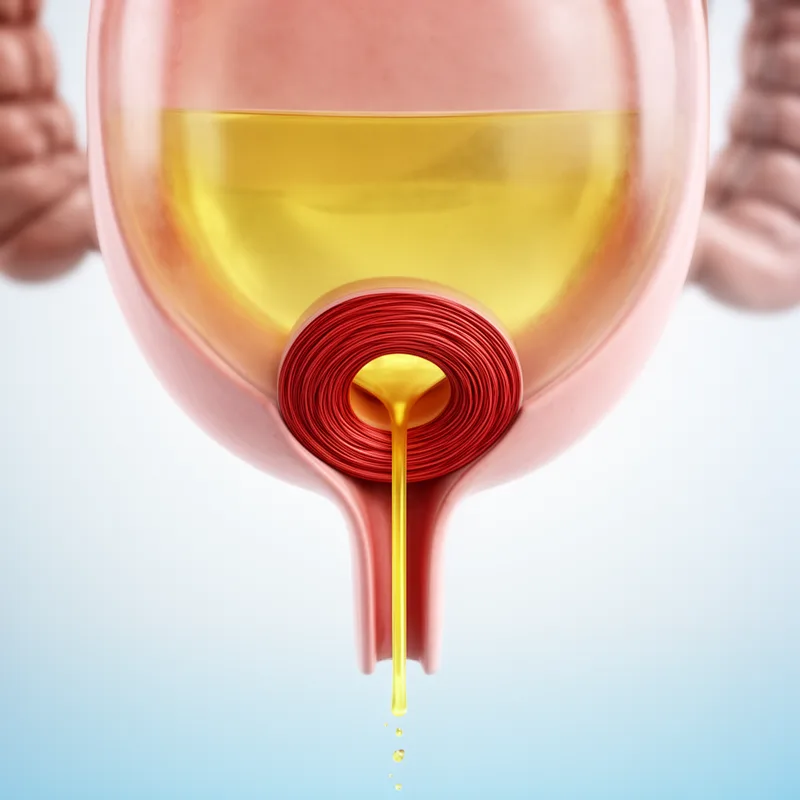
musculus sphincter vesicae
- noun
- /ˈmʌskjələs ˈsfɪŋktər vɛˈsɪki/
- Specialized
- During urination, the musculus sphincter vesicae relaxes to allow the flow of urine.
Examples
-
Damage to the musculus sphincter vesicae can lead to urinary incontinence.
-
The contraction of the musculus sphincter vesicae is essential for continence.
-
The musculus sphincter vesicae controls urine flow.
-
In males, the musculus sphincter vesicae is vital for bladder function.
-
The contraction of the musculus sphincter vesicae is essential for controlling the release of urine.
-
During urination, the musculus sphincter vesicae relaxes to permit the flow of urine from the bladder.
-
Damage to the musculus sphincter vesicae can result in issues with urinary control.
Synonyms
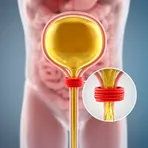
A ring of muscle that holds urine in the bladder and lets it out through a tube
Surface Forms
Morphology
The term is fully compositional: 'musculus' (muscle) + 'sphincter' (a closing/regulating muscle) + 'vesica' (a sac holding liquid, i.e. bladder) yields 'the sphincter muscle of the bladder' whose function (controlling urine release) follows directly from the parts. Although the phrase is technical and uses Latin morphology, a learner who knows the constituent meanings can reliably infer the overall sense.
Etymology
Musculus sphincter vesicae is a Latin name that gives a clear picture: musculus means 'muscle', sphincter means 'a ring that squeezes', and vesicae means 'bladder'. That's why the name describes a ring of muscle that opens and closes to control the release of urine.

