
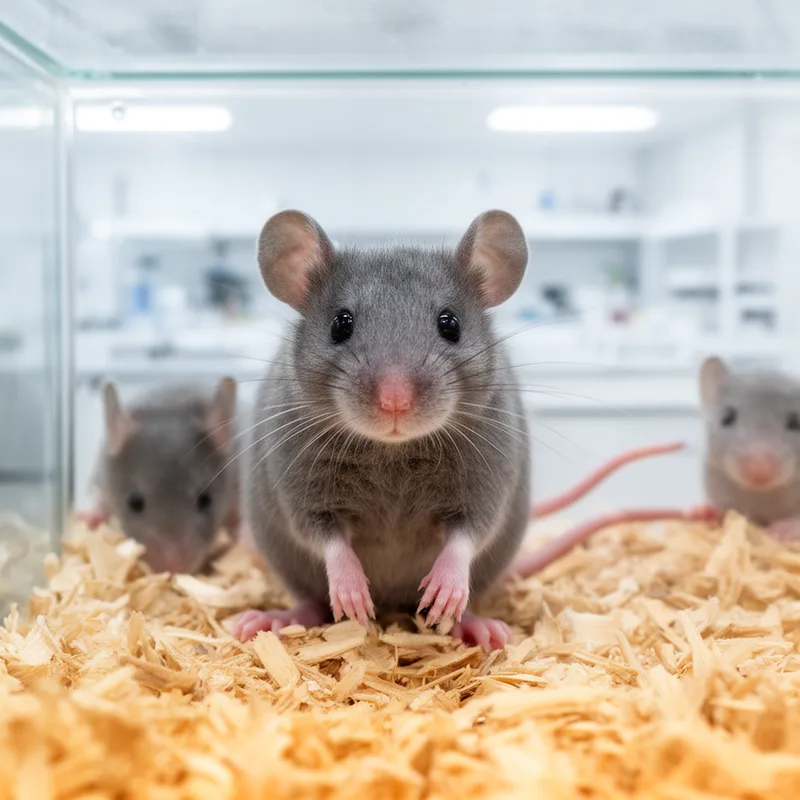
murine
 1
8.9
1
8.9

- noun
- /ˈmjʊəraɪn/
- Specialized
- The most widely used monoclonal antibodies are of murine origin.
- murine typhus
- murine model
- murine neutrophils
Examples
-
Specific studies are needed to assess the effect of murine typhus on public health and to describe the epidemiology of the disease.
Academic text (2015) -
The researcher studied the behavior of various murine species in their natural habitat.
-
A murine typhus case was initially identified in Reunion, France, in 2012 in a tourist.
Academic text (2015) -
Our results support the hypothesis that murine typhus could be a major cause of fever in Reunion.
Academic text (2015) -
Examples of recent preclinical studies (using murine models if not stated otherwise) are briefly described below.
Academic text (2017) -
In early 2012, murine typhus was reported in a tourist returning from Reunion (7).
Academic text (2015) -
The best way to prevent murine typhus is to minimize exposure to ectoparasite vectors by limiting contact with rodents and fleas.
Academic text (2015) -
Serologic and molecular evidence is sufficient to indicate that autochthonous transmission of murine typhus exists in Réunion.
Academic text (2015) -
Scientists often use murine models to test new medications before human trials.
-
In the laboratory, they observed the reproduction rates of different murine populations.
Synonyms
 117
2.8
117
2.8
A small animal like a mouse or rat that uses strong front teeth to chew

A small animal like a mouse or rat
Compounds

Surface Forms
Etymology
Murine comes from the Latin root muris ('mouse'). As a noun, a murine is simply a 'mouse' or a close relative like a 'rat'.