
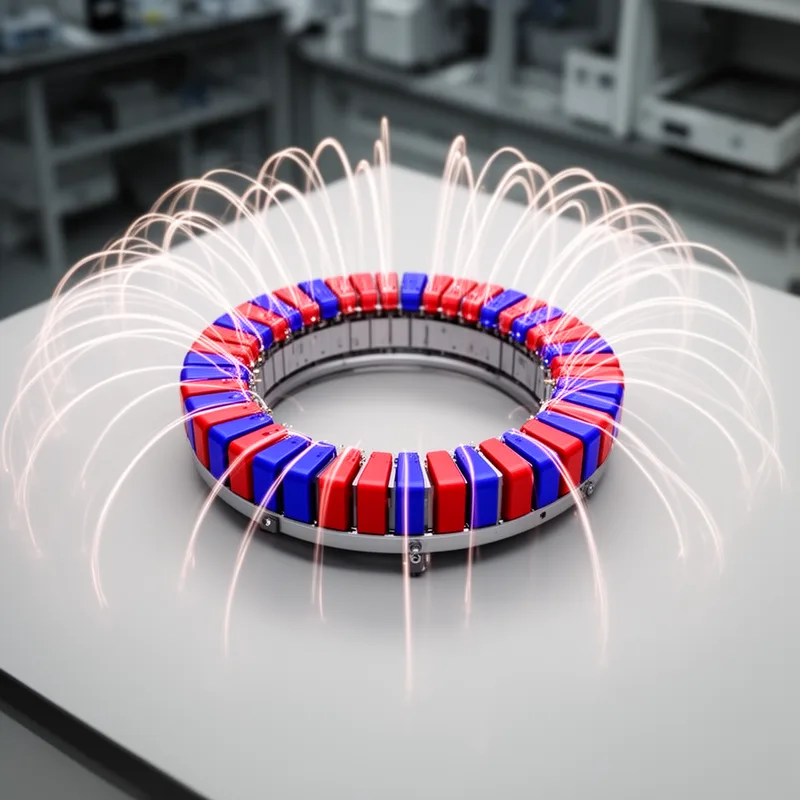
multipole
- adjective
- /ˈmʌltɪˌpoʊl/
- Specialized
- The functions A and B have simple expressions when individual electromagnetic multipole transition-matrix elements dominate the scattering process.
- electromagnetic multipole
- multipole transition
- high-multipole
Examples
-
The best approach is to correct the aberrations of the electron lenses using electric and magnetic multipole elements.
Academic text (1997) -
Such high-multipole electromagnetic transitions are very slow.
Academic text (2006) -
But such high-multipole transitions have never been seen.
Academic text (2006) -
Spin traps relax very slowly because high-multipole electromagnetic transition amplitudes are intrinsically weak.
Academic text (2006) -
The decay of isomers by electromagnetic transitions of multipole order lower than K, the difference in K between initial and final states, requires a mixing of K values in either state.
Academic text (2006) -
In the future, spherical and chromatic aberration may be eliminated by using asymmetrical magnetic fields from magnetic multipole lenses.
Academic text (1997) -
To improve the ability of BEM in solving these problems, several treatment methods have been proposed, such as the fast multipole BEM 2, 5, 6 and the wave boundary elements 7, which may make the BEM more efficient for solving interior acoustic problems.
Blog text (32) -
The researchers utilized a multipole approach to analyze the complex electromagnetic fields in their study.
-
By incorporating multipole elements in the design, the device's efficiency was significantly enhanced.
-
The experiment demonstrated the advantages of a multipole configuration in generating stronger magnetic fields.
Synonyms
With more than two points that have electric or magnetic charge
Antonyms
- Specialized
 2
7.9
2
7.9

Having only one main center, for example one country or one electrical pole
How Many Poles


Surface Forms
Morphology
Etymology
Multipole combines multi- 'many' and pole 'end or post', like the North Pole. So a multipole device has 'many poles' instead of just two, which is why the word means having more than two poles in electrical or magnetic systems.