
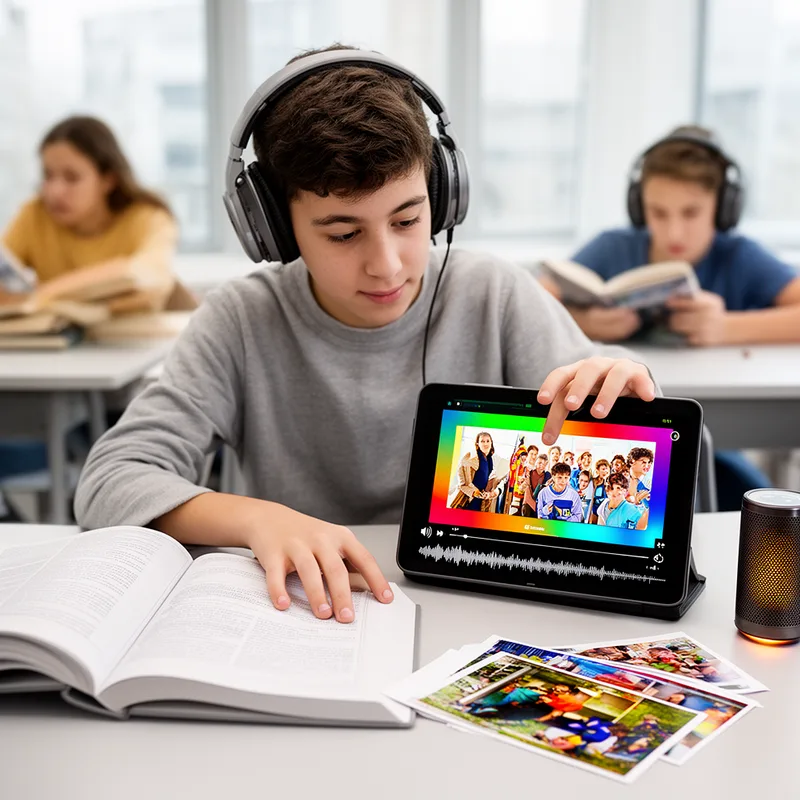
multiliteracy


 1
7.2
- noun
- /ˌmʌltiˈlɪtərəsi/
- Specialized
- In EFL classrooms in which students speak multiple languages, teachers can promote multiliteracy, expand awareness of linguistic and cultural diversity at the school, and validate students' identities by including writing tasks such as identity texts (Cummins, 2006).
Examples
-
"Visual Culture isn't Just Visual: Multiliteracy, Multimodality and Meaning." Studies in Art Education 43.3 (2004): 252-64. Print.
Academic text (2014) -
In today's digital age, multiliteracy involves being skilled at interpreting different forms of communication, including text, images, and videos.
-
Teachers are encouraged to incorporate multiliteracy into their curricula to help students better navigate various media formats.
-
Understanding multiliteracy is essential for effective communication in a world filled with diverse media and communication channels.
Synonyms
 1
7.2
Using different ways like text, pictures and sound together in communication
Antonyms

How Multiliterate
- Specialized
1
7.2
 63
2.6
Surface Forms
Morphology
Etymology
The word multiliteracy joins multi- ('many') and literacy ('ability to read and write', related to the word letter). So, multiliteracy means the skill to understand and make many kinds of messages, like text, images, and audio.