

mouthless


 1
8.4
- adjective
- /ˈmaʊθləs/
- Who knew a giant and mouthless buttless worm could completely redefine the way we thought about how life works on our planet?
Examples
-
Joseph Campbell (1976) uses this last example, mouthless primitive art, to marshal evidence for what he thought might be an instinctual or innate basis for recurrent myth and symbol.
Academic text (1994) -
Who knew a giant, mouthless, buttless worm could completely redefine the way we thought about how life works on our planet?
-
I could go see a film that was made by a friend of mine that had, among other things, a mouthless clown and a guy wearing a sweater you'd expect to see on a 1970s.
Blog text (31) -
Voiceless it cries, Wingless flutters, Toothless bites, Mouthless mutters.
-
The creature was a strange, mouthless entity that seemed to communicate through gestures.
-
In the underwater exhibit, visitors marveled at the mouthless fish gliding silently past the glass.
-
Scientists discovered a mouthless species of amphibian that absorbs nutrients directly through its skin.
Synonyms
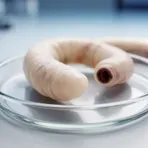
A living thing that has no mouthlike opening
Surface Forms
Morphology
Etymology
Mouthless is made from mouth and the ending -less, where -less means 'without' and appears in words like hopeless. So, mouthless simply means 'without a mouth', which explains why we use it for things that have no mouth or mouthlike opening.