

moss phlox
- noun
- /mɔs flɑks/
- US
- Gardeners often use moss phlox to create a beautiful, low-maintenance ground cover.
Examples
-
I planted moss phlox in my garden last year.
-
The moss phlox blooms beautifully in the spring.
-
Moss phlox blooms in early spring, covering the rock garden with vibrant color.
-
The pink flowers of moss phlox attract butterflies to the yard.
-
In the garden, moss phlox forms a colorful blanket of pink flowers in spring.
-
Moss phlox is an excellent choice for ground cover, thriving in sunny areas.
-
During the spring months, moss phlox produces clusters of white blossoms that brighten up the landscape.
Synonyms

 1
9.5
1
9.5

A garden plant with clusters of small bright flowers that attract butterflies

A low plant with thin evergreen leaves and pink or white flowers used as ground cover

A low, spreading plant with thin needle leaves and pink or white flowers used to cover the ground
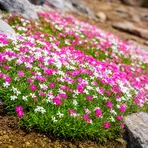
A low plant with thin, green leaves and pink or white flowers used as a ground cover

A low plant with pink or white flowers that spreads to cover the ground

A low plant with small flowers that forms mats on rocky ground
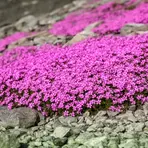
A low plant that forms a mat on rocky ground with small pink flowers
Surface Forms
Morphology
The compound is compositional: 'moss' (low, mat-forming plant) combined with 'phlox' (a genus of flowering plants) yields a phlox species with moss-like, low-growing habit. Although botanical, the meaning as a ground-covering, low phlox is directly inferable from the constituents, so a B1 learner who knows both words would understand it.
Etymology
Moss phlox may come from the plant's look: moss because it grows very low and makes a soft green 'carpet', and phlox because its small flowers look like bright 'flames' or spots of colour. So the name helps you picture a low 'ground cover' full of colorful blooms.